As customer expectations, regulations, and cross-border delivery requirements continue to rise, can your solder-wire supply still meet automated production’s demands for consistency, traceability, and reliability?
For a growing number of electronics manufacturers, lead-free production now affects material sourcing, process validation, equipment setup, and supply-chain management. Specific exemptions and technical requirements still apply in certain markets and industries. However, for electronics manufacturers serving markets governed by RoHS requirements and customer material specifications, lead-free soldering has become an important supply-chain benchmark rather than an optional extra.
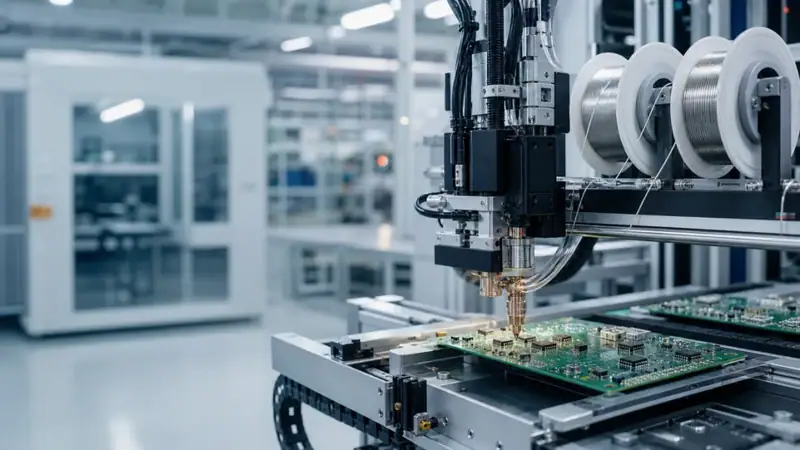
Automated soldering processes place higher demands on solder-wire supply stability, specification consistency, and process compatibility.
Lead-Free Conversion Is More Than a Material Substitution: It Is a Supply-Chain Upgrade
Moving from leaded solder to lead-free solder wire may appear to be a simple consumables change, but it affects how several teams work together. Procurement teams must verify the alloy, wire diameter, flux, and documentation. Manufacturing teams must revalidate process windows. Quality teams must monitor joint consistency, lot traceability, and incoming-material stability.
In other words, lead-free conversion is not a single-product decision. It is a coordinated effort involving materials, equipment, processes, and compliance documentation.
| Area Affected | Lead-Free Considerations | Supply-Chain Significance |
|---|---|---|
| Material Sourcing | Alloy composition, solder-wire diameter, flux performance, and lot consistency | Reduces the impact of material variation between lots on production |
| Automated Production | Feeding smoothness, melting and wetting behavior, and spatter control | Supports stable throughput and reduces stoppages and equipment adjustment |
| Quality Management | Solder-joint appearance, reliability, incoming inspection, and lot traceability | Helps establish a verifiable, traceable quality system |
| Compliance and Export | RoHS declarations, test documents, and customer material specifications | Helps support customer audits and delivery requirements across markets |
| Rework and Maintenance | Temperature-control capability, desoldering tools, and rework-process validation | Reduces the risk of increased rework after a material change |
Why Does Automated Production Depend More on Solder-Wire Consistency?
In manual soldering, operators can use experience to adjust the angle, dwell time, and heating method to accommodate a certain degree of material variation. Automated soldering and automatic wire-feeding processes rely on predefined programs, speeds, and temperature settings, leaving less tolerance for material fluctuation.
For this reason, solder wire intended for automated processes should not be compared on price alone. Buyers should also assess whether it can perform consistently during continuous feeding, stable melting, and repeated operations.
Key considerations typically include:
- Whether wire diameter is consistent and compatible with the existing wire-feeding or soldering system
- Whether the winding is even and supports continuous feeding
- Whether the alloy and flux are suitable for the target process
- Whether melting, wetting, fume, and spatter performance meet on-site requirements
- Whether lot information, samples, and relevant technical documents are available
- Whether the supplier can maintain specification consistency in subsequent volume deliveries
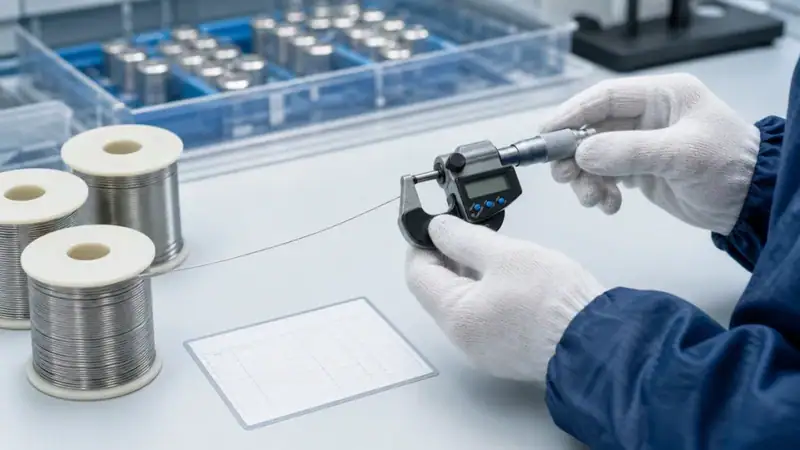
Wire-diameter and lot consistency form the foundation for stable automated solder feeding.
What Changes on the Production Floor After Switching to Lead-Free Solder Wire?
Lead-free processes typically require more careful validation of temperature, wettability, solder-joint quality, and rework conditions. Different alloys, flux formulations, and soldering applications do not perform in the same way, so “lead-free” should not be treated as a single, uniform material attribute.
Before introduction, manufacturers should match material selection to the actual application, whether PCB assembly, wire connection, dip soldering, wave soldering, manual touch-up, or rework. For automated processes in particular, samples and small-batch trials should be used to confirm compatibility between the material and equipment parameters.
| On-Site Issue | What to Validate | Recommended Response |
|---|---|---|
| Temperature-Window Changes | Whether melting and soldering temperatures suit the current equipment | Confirm temperature-control parameters through sample testing. |
| Solder-Joint Wettability | Joint-formation speed, appearance, and coverage | Validate in combination with the PCB, components, and flux conditions. |
| Wire-Feeding Stability | Whether wire jams, breaks, or feeds unevenly | Confirm compatibility among wire diameter, winding, and equipment. |
| Fume and Spatter | Whether they affect the work environment or finished-product cleanliness | Evaluate material characteristics and use a suitable fume-extraction solution. |
| Rework Difficulty | Whether desoldering, touch-up, and temperature control become more challenging | Evaluate rework stations, desoldering equipment, and operating procedures at the same time. |
Incomplete Conversion Often Creates Hidden Costs
If a company changes only the solder material without confirming the equipment, process, and quality controls at the same time, problems often emerge only after volume production begins. Common risks include repeated equipment adjustment, higher rework rates, inconsistent solder joints, incomplete incoming-material documentation, and traceability difficulties during customer audits.
A more reliable approach is therefore not simply to find “cheaper lead-free solder wire,” but to work with a partner that can support validation, specification confirmation, and consistent ongoing supply. Procurement teams can clarify the following points during the inquiry stage:
| Procurement Confirmation | What to Confirm with the Supplier |
|---|---|
| Alloy System | Lead-free alloys suitable for the intended application, together with relevant technical advice. |
| Solder-Wire Specification | Wire diameter, spool weight, winding method, and compatibility with automatic feeding. |
| Flux Performance | Activity, residue requirements, and fume and spatter control needs. |
| Compliance Documents | RoHS declarations, test information, and documents required by customers. |
| Quality Traceability | Lot management, incoming inspection, and controls for specification consistency. |
| Sample Validation | Whether samples can be provided for equipment and process testing. |
| Supply Assurance | MOQ, packaging, lead time, after-sales support, and capacity for ongoing supply. |
From Materials to Rework: Building More Complete Lead-Free Soldering Capability
Lead-free conversion should not stop at solder-wire purchasing. For electronics manufacturers, the fit between materials and process equipment is equally important.
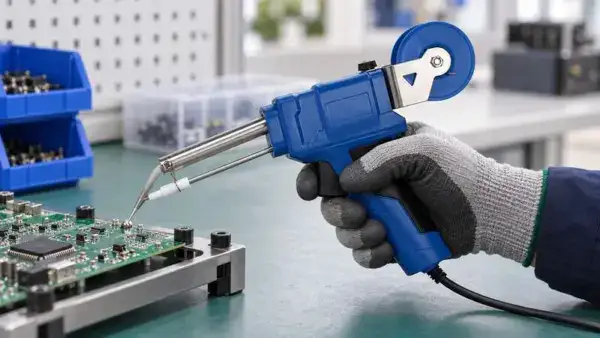
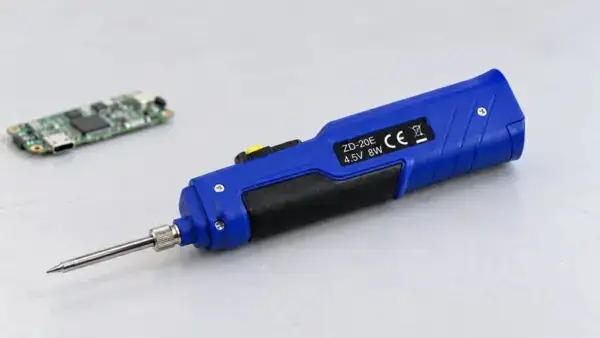
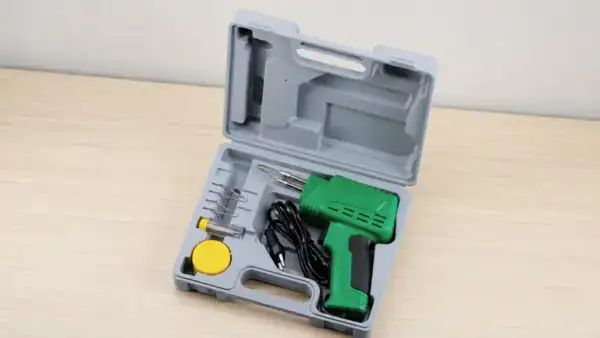
Zhongdi’s product range includes solder wire, solder bars, solder pots, soldering tools, and rework and desoldering equipment, allowing buyers to extend their discussion from material selection to process support. Its solder-wire product pages include both lead-free and conventional solder-wire options; lead-free solder bars can be used in wave-soldering and dip-soldering applications; and selected rework and desoldering products are designed for lead-free soldering or desoldering environments.
For buyers introducing or expanding lead-free processes, a more effective purchasing approach is to discuss the actual production flow rather than ask only about the price of a single item:
- Target markets and applicable customer specifications
- Current equipment and process types
- Required solder-wire alloy, diameter, and packaging format
- Whether samples and process validation are required
- Whether solder pots, soldering stations, rework equipment, or desoldering equipment are also needed
- Specific requirements for OEM service, packaging, lot documentation, and lead times
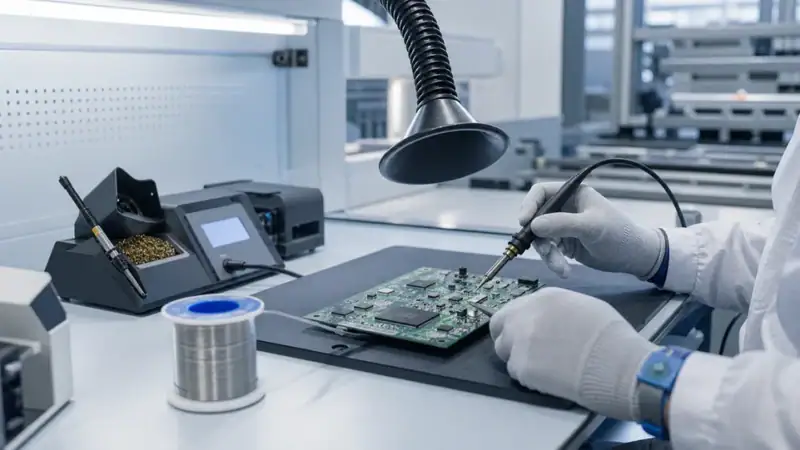
A lead-free transition should also cover rework, temperature control, and on-site process validation, not just material purchasing.
Treat Lead-Free Solder Wire as Part of Your Manufacturing Capability
Lead-free conversion is moving electronics manufacturing supply chains from simply purchasing consumables to managing process inputs. In automated soldering, solder-wire alloy, diameter, winding, flux behavior, and lot consistency all directly affect production cadence, solder-joint quality, and customer delivery performance.
A genuinely competitive supply chain is not one that can merely buy lead-free solder wire. It is one that can support long-term manufacturing needs with suitable materials, reliable validation procedures, and stable ongoing supply.
To discuss lead-free solder wire, solder bars, automated soldering applications, or compatible rework equipment, submit your target market, process requirements, and sample requirements to Zhongdi for more relevant product recommendations.
Looking for a Reliable Lead-Free Solder Wire Manufacturer? Partner with ZHONGDI
ZHONGDI supports electronics manufacturers, importers, and distributors with lead-free solder wire, solder bars, and compatible soldering and rework equipment. Contact our team to discuss alloy selection, wire diameter, packaging, samples, documentation, and supply requirements for your automated soldering process. Contact us.