For electronics assembly and repair, choose a solder pot by matching the intended task with its pot size, controls and physical format. Our range covers a larger wire-tinning bench unit, a compact adjustable pot and a small handled tool. This guide explains the differences so you can narrow your selection before comparing the available electrical versions.
Which Solder Pot Fits the Work You Are Sourcing For
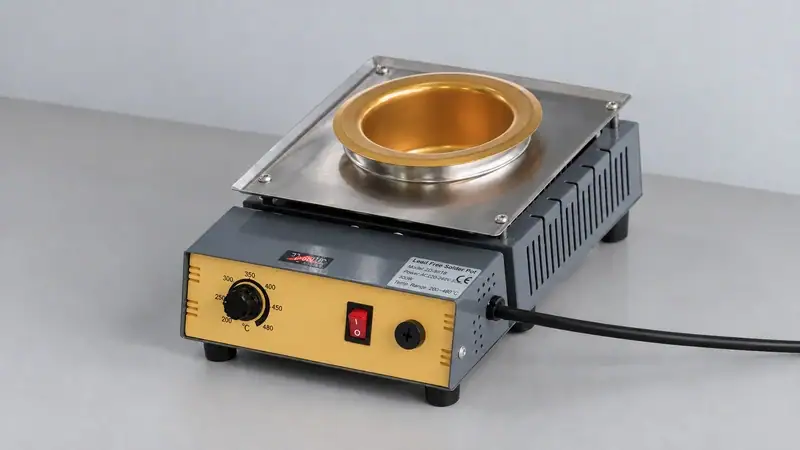
If your enquiry starts with wire-end tinning, a bench pot designed for that application is a practical place to begin. The ZD-8911B Solder Pot for Tinning Wires is designed for tinning wire ends and small assemblies in production, repair and prototyping. It combines a round pot with adjustable temperature control and a separate power switch.
Its 1350 g maximum solder capacity and 80 mm pot diameter distinguish it from the compact bench model in this guide. If you are comparing a solder pot for tinning wires, these are useful dimensions to bring into the equipment review: the amount of solder held in the vessel and the opening available at the top.
The complete unit sits on the bench, with the pot above the front control panel. You can compare the vessel and controls together as one piece of equipment. This format is relevant when your sourcing brief calls for a bench soldering pot rather than a handled tool.
A Mini Solder Pot for a Compact Bench Setup
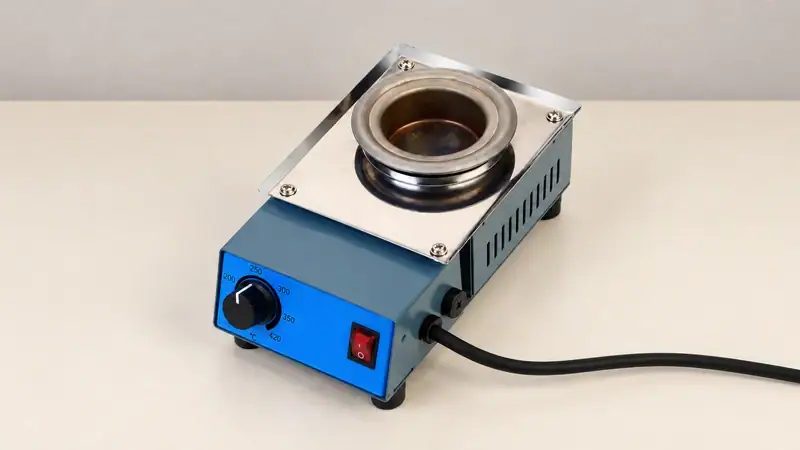
The ZD-8911C Mini Solder Pot offers adjustable control in a compact bench unit. Its 300 g maximum solder capacity gives you a smaller-capacity alternative to ZD-8911B while retaining a bench-mounted arrangement.
The stainless steel tray and raised anti-waste edges form part of its construction. The raised edges help prevent melted solder from flowing into the furnace area. For a buyer looking at the whole unit, these details show how the pot and surrounding tray are arranged.
This model is worth considering when your requirement centres on a compact adjustable solder pot. Compare its capacity and control range with the larger unit before moving to voltage selection. The word “mini” identifies a general size category; the actual capacity gives the comparison a concrete starting point.
A Handled Solder Pot for Electronics Repair
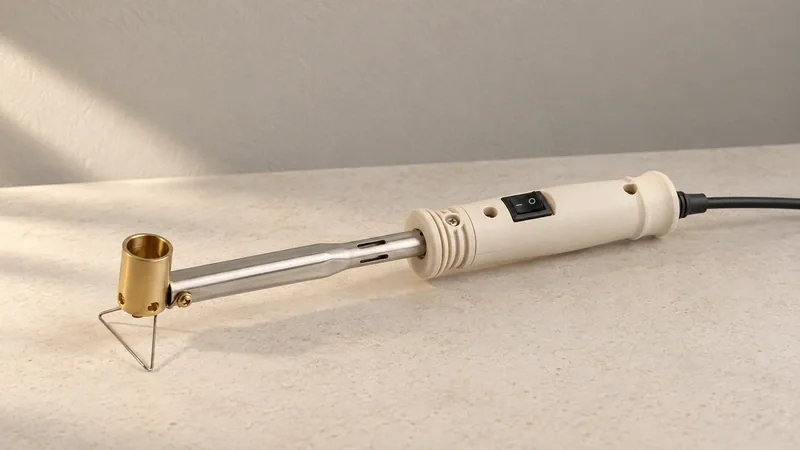
The ZD-715E Mini Solder Pot for Electronics Repair has a small copper pot at the end of a metal shaft, a heat-proof plastic handle, a power switch and a resting stand. Its applications include wire-end tinning, circuit-board repair and electronic-component repair.
If you are sourcing this handled format, the complete tool is the relevant comparison. Its construction differs from a pot set into a rectangular bench body. The handle and stand are part of the model, while the on/off switch provides its power control.
For an electronics repair assortment, this gives you a distinct product alongside adjustable bench pots. Choose it because the handled construction matches the type of tool you want to offer or use. Adjustable temperature control belongs to the two bench models discussed here.
Capacity and Pot Opening Answer Different Questions
A solder pot’s maximum capacity tells you how much solder it can contain. The opening describes the physical access to the vessel. Both deserve attention when reviewing equipment for a particular wire-tinning task.
For the two bench units, the difference in capacity is substantial: ZD-8911B holds up to 1350 g, while ZD-8911C holds up to 300 g. ZD-8911B also has an 80 mm pot diameter. If your brief specifies a pot opening or solder capacity, use those values to narrow the bench-unit comparison.
Heating power adds another equipment detail. The larger bench model is rated at 300 W, the compact bench model at 200 W and the handled model at 100 W. Those figures describe different constructions. Reading the wattage alongside the pot format gives you a more useful comparison than selecting by power alone.
| Model | Format and capacity | Heating power | Control |
| ZD-8911B | Bench pot; 1350 g maximum; Ø80 mm opening | 300 W | 200–480°C, knob and switch |
| ZD-8911C | Compact bench pot; 300 g maximum | 200 W | Adjustable 200–420°C |
| ZD-715E | Small copper pot with handle and stand | 100 W | On/off power switch |
Do You Need an Adjustable Solder Pot
Temperature adjustment is a key difference between the bench pots and the handled model. ZD-8911B offers a 200–480°C range; ZD-8911C offers a 200–420°C range. ZD-715E uses a power switch.
If adjustment is part of your requirement, the two bench models are the relevant choices in this comparison. Capacity then helps distinguish them: the larger wire-tinning vessel and the smaller compact pot offer different starting points for the workbench.
For a handled-tool requirement, ZD-715E has its own place in the selection. Its handle, copper pot and stand are the features to evaluate. This lets you settle the physical format and control requirement together before comparing the remaining purchasing details.
Comparing a Lead Free Solder Pot
ZD-8911B and ZD-8911C are designed for lead-free soldering operations. If you are looking for a lead free solder pot, both models belong in the initial comparison. Their shared application leaves the pot capacity, construction and available temperature range as the main differences to consider.
The adjustment range describes the available equipment settings. Your operating temperature remains a separate process decision. A wider range can be considered alongside capacity, but it does not make every task require the upper end of that range.
When Your Brief Specifies Both Format and Control
A request for a small solder pot can still describe two different purchases. If you need a compact unit with temperature adjustment, ZD-8911C is the relevant format in this comparison. If the request specifically calls for a handle and resting stand, ZD-715E has that construction. Resolving these two requirements early prevents a shortlist based only on the word “small” from combining products with different controls.
For wire-tinning equipment, capacity adds another decision. A requirement for the larger vessel directs attention to ZD-8911B. If the smaller bench capacity fits your brief, ZD-8911C remains an adjustable option. The distinction is useful when you are sourcing several products: a larger pot and a compact pot can meet separate equipment briefs within the same order.
Select the Voltage Version for Your Market
We offer the bench pots in 110–130 V and 220–240 V versions. ZD-715E has separately listed 110 V and 220 V versions. Once you have chosen the model, the product code identifies the corresponding electrical version.
| Model | Product code | Voltage |
| ZD-8911B | 89-1105 | 110–130 V |
| 89-1106 | 220–240 V | |
| ZD-8911C | 89-1111 | 110–130 V |
| 89-1112 | 220–240 V | |
| ZD-715E | 88-7445 | 110 V |
| 88-7446 | 220 V |
For importers supplying European and North American channels, the exact electrical version is more useful than a broad market label. The same model can appear in more than one regional range. Comparing the listed voltage with the required supply keeps the selected equipment and version together.
From an Equipment Brief to a Specific Model
Consider a purchasing brief that specifies wire-end tinning, an adjustable bench unit and a stated voltage range. Start by reviewing the two bench formats against the capacity needed. Once the model is selected, the electrical code completes the version choice. This sequence gives you a specific product to compare when requesting pricing.
A repair-tool brief that specifies a handled pot follows a different path. ZD-715E provides the handle, copper pot and stand. Its electrical options can then be reviewed within that format. This keeps the equipment choice connected to the intended work throughout the enquiry.
If you serve more than one market, one model may need to be considered in more than one electrical version. A requirement for two voltage ranges is therefore a version question as well as a model question. We can discuss the relevant products together, with each selected version identified separately. That is particularly useful when comparing an assortment containing both adjustable bench pots and a handled repair tool.
Common Solder Pot Selection Questions
Which Models Have Temperature Adjustment
ZD-8911B and ZD-8911C provide adjustable temperature control. ZD-715E has an on/off switch. If your brief calls for adjustment, compare the two bench models and their respective capacities.
Which Model Has the Larger Solder Capacity
ZD-8911B has the larger capacity of the two bench units covered here, at 1350 g maximum. ZD-8911C has a 300 g maximum capacity. The larger unit also has an 80 mm pot diameter.
Can I Source Bench and Handled Formats Together
Our range includes both formats. You can compare the two bench models and the handled ZD-715E within one product discussion, then review each model’s electrical version.
Request a Quote for Our Solder Pots
Looking for a reliable solder pot manufacturer? Partner with Zhongdi. We support importers, distributors and brand owners with mini solder pots and wire-tinning solder pots. Contact Us to discuss product selection, pricing, packaging and target-market requirements for your channel.