Wenn Sie gerade gekauft haben Ihr erster Lötkolben, die Aufregung, direkt in Ihr erstes elektronisches Projekt einzutauchen, ist völlig verständlich. Doch bevor Sie auch nur daran denken, einen einzelnen Draht anzuschließen oder Ihre erste Verbindung herzustellen, gibt es einen grundlegenden Schritt, den Sie auf keinen Fall überspringen dürfen: die Spitze verzinnen. Dieser Leitfaden führt Sie durch den gesamten Prozess – vom Verständnis, warum Verzinnen wichtig ist, bis hin zur genauen Technik, die Ihre Lötkolbenspitze über Jahre hinweg in einwandfreiem Zustand hält.
Was bedeutet es, die Spitze zu verzinnen?
Verzinnen bedeutet einfach, die Spitze des Lötkolbens mit einer frischen, dünnen Schicht Lot zu bedecken. Das Wort selbst kommt vom Element Dose, eines der Hauptmetalle, die im Lötdraht vorkommen. Wenn Sie die Spitze verzinnen, erzeugen Sie im Wesentlichen eine Schutzschicht auf der darunter liegenden Arbeitsfläche. Diese Barriere macht den Unterschied zwischen einer Spitze, die eine hervorragende Leistung erbringt, und einer Spitze, die bereits bei den ersten paar Einsätzen versagt. Eine gut verzinnte Spitze erscheint glänzend und silbern – diese glänzende Oberfläche ist der beste Indikator für ein gesundes, gut gepflegtes Bügeleisen.
Warum ist Verzinnen so wichtig?
Die Wissenschaft hinter der Verzinnung ist einfach. Eine blanke Lötkolbenspitze besteht typischerweise aus einem Kupferkern, der nacheinander mit einer Eisenüberzugsschicht, einer Nickelschicht und und eine Chromschicht, die nur auf die nicht arbeitenden Bereiche des Schafts aufgetragen wird. Die Eisenplattierungsschicht bildet die primäre Arbeitsoberfläche und ist die Schicht, die während des Gebrauchs am anfälligsten für Erosion ist. Wenn diese Oberfläche gleichzeitig hohen Temperaturen und offener Luft ausgesetzt ist, Oxidation setzt schnell ein. Oxidation ist die gleiche chemische Reaktion, die verursacht Metallkorrosion – nur hier entsteht eine schwarze, nicht benetzbare Schicht, die die Lötleistung beeinträchtigt. Hier ist, was das ist Oxidation kostet Sie tatsächlich:
- Wärmeübertragung: Eine schwarze, oxidierte Spitze isoliert statt zu leiten, was bedeutet, dass die Wärme nicht richtig vom Lötkolben zu Ihrem Lot und Ihren Bauteilen fließen kann.
- Lebensdauer der Spitze: Ohne schützende Lötbeschichtung, die Spitze eisenbeschichtete Arbeitsfläche zersetzt sich schnell, insbesondere bei höheren Temperaturen.
- Lötqualität: Verunreinigte Spitzen führen eher zu kalten, stumpfen Verbindungen als zu sauberen, glänzenden – ein ernstes Problem für jede elektronische Arbeit.
Verzinnen löst all diese Probleme in einem einfachen Schritt Versiegelung der eisenbeschichteten Arbeitsfläche vollständig von Sauerstoff fernhalten.
Was Sie brauchen
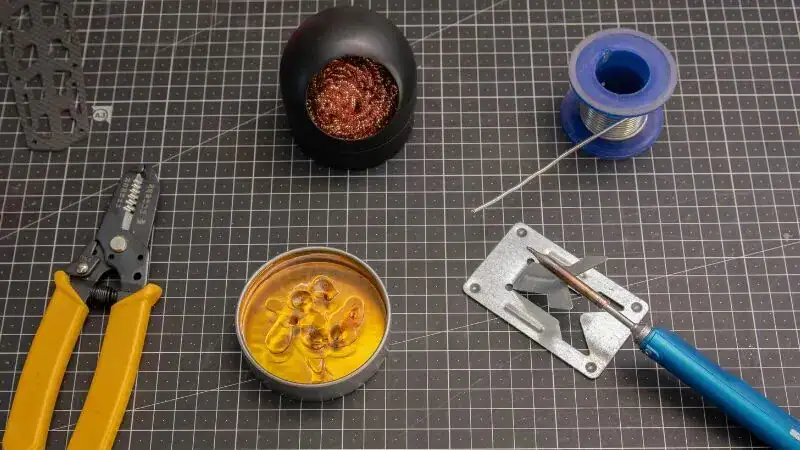
Das Sammeln der richtigen Materialien, bevor Sie beginnen, macht das Ganze aus Prozess sanfter und sicherer:
- Lötkolben: Jeder Lötkolben mit einer stabilen Löttemperaturregelung reicht aus.
- Löten: Ein Lot mit Kolophoniumkern (60/40 Zinn-Blei oder bleifrei) funktioniert am besten. Der Kolophoniumkern enthält ein integriertes Flussmittel, das die Bindung unterstützt.
- Flussmittel: Ein kleiner Topf zusätzlicher Flussmittelpaste eignet sich hervorragend, um sicherzustellen, dass das Lot sauber und ohne störende Verunreinigungen auf der Oberfläche haftet.
- Feuchter Schwamm oder Spitzenreinigerr: A Spitzenreiniger aus Messingwolle ist die bevorzugte Wahl, da es reinigt, ohne dass es zu einem Thermoschock an der Beschichtung kommt. Wenn Sie einen feuchten Zelluloseschwamm verwenden, wringen Sie ihn halbtrocken aus – ein zu nasser Schwamm kann einen Thermoschock verursachen, der die Beschichtung der Spitze bricht.
- Sicherheitsausrüstung: Beim Arbeiten mit heißem Lot sind eine Brille und eine ausreichende Belüftung unerlässlich.
Schritt-für-Schritt: Das erste Mal Ihren Lötkolben verzinnen
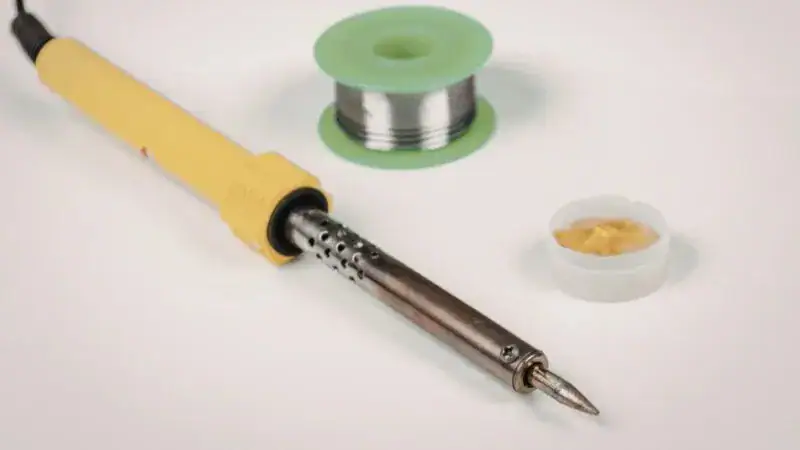
Schritt 1 – Bereiten Sie alles vor dem Erhitzen vor
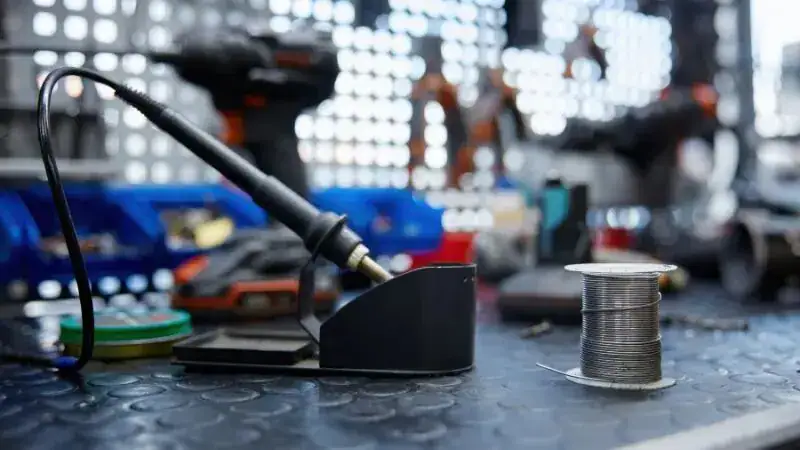
Richten Sie Ihren Arbeitsplatz sorgfältig ein, bevor Sie Hitze anwenden. Platzieren Sie den Lötkolben sicher in seinem Ständer, wickeln Sie das Lötzinn ab und halten Sie es griffbereit, und stellen Sie sicher, dass Ihr feuchter Schwamm oder Spitzenreiniger bereitliegt. Der Grund für diese Vorbereitung ist entscheidend: Sobald die Spitze heiß wird, dauert es nur ein sehr kurzes Zeitfenster, bis die Oxidation an einer blanken Spitze beginnt. Es bleibt keine Zeit, nach Materialien zu suchen.
Schritt 2 – Erhitzen Sie den Lötkolben auf die richtige Löttemperatur
Für herkömmliches 60/40-Zinn-Blei-Lot stellen Sie Ihren Lötkolben auf eine mäßige Temperatur ein – idealerweise dazwischen 300°C und 350°C (572°F bis 662°F). Wenn Sie bleifreies Lot (z. B. SAC305) verwenden, ist eine höhere Temperatur von ca 350°C bis 380°C (662°F bis 716°F) ist typischerweise erforderlich, um eine ordnungsgemäße Benetzung und Verbindungsqualität zu erreichen. Widerstehen Sie der Versuchung, den empfohlenen Bereich zu überschreiten. Wenn Sie Ihr Bügeleisen bei höheren Temperaturen als nötig betreiben, wird die Oxidation erheblich beschleunigt und die Lebensdauer der Spitze verkürzt. Achten Sie beim Aufheizen des Lötkolbens genau auf die Spitze des Lötkolbens. Möglicherweise bemerken Sie eine beginnende leichte Verfärbung – dies ist das frühe Anzeichen einer beginnenden Oxidation und Ihr Signal, schnell zu handeln.
Schritt 3 – Sofort Lot auftragen
Der Moment, in dem die Spitze heiß genug ist, um das Lot zu schmelzen – die genaue Zeit variiert je nach Wattzahl und Leistung Ihres Lötkolbens; Eine Station mit hoher Wattzahl kann in weniger als einer Minute fertig sein, während ein Bügeleisen mit niedriger Leistung länger brauchen kann – wischen Sie sie schnell mit Messingwolle oder einem feuchten Schwamm ab, um leichte Oxidation oder Rückstände zu entfernen. Geben Sie dann sofort Lot auf die Arbeitsfläche der Spitze, bevor sich neue Oxidation bilden kann. Drehen Sie es leicht, damit die Abdeckung gleichmäßig und vollständig ist. Berühren Sie nicht nur das Ende; Arbeiten Sie das Lot um den gesamten Funktionsbereich des Bits herum. Das Flussmittel im Inneren des Kolophoniumkernlots wird bei der Temperatur aktiviert und sprudelt leicht, da es alle geringfügigen Oberflächenoxide, die sich möglicherweise während des Erhitzens gebildet haben, chemisch reduziert. Das ist völlig normal. Sie sollten sehen, wie das flüssige Lot an der Spitze haftet und fast sofort eine helle, glänzende, spiegelähnliche Beschichtung bildet.
Profi-Tipp: Wenn Ihr Lot Perlen bildet und überhaupt nicht schmilzt oder klebt, tragen Sie einen kleinen Tupfer auf Flussmittelpaste zuerst direkt zum Tipp. Das Flussmittel wirkt als chemischer Reiniger, der unsichtbare Oxidation entfernt und dabei hilft, dass sich das Lot richtig mit der Oberfläche verbindet.
Schritt 4 – Spitze abwischen und neu verzinnen
Sobald die gesamte Funktionsfläche beschichtet ist, drücken Sie die Spitze vorsichtig in den Messingwolle-Spitzenreiniger. Dadurch werden überschüssiges Lot, verbrannte Flussmittelrückstände und alle verbleibenden Verunreinigungen entfernt. Unmittelbar nach dem Wischen – und das ist entscheidend – Tragen Sie eine frische, dünne Schicht Lot auf, um die Oberfläche neu zu verzinnen. Dieser zweistufige Prozess des Abwischens und erneuten Verzinnens ist die Grundlage für die richtige Pflege der Spitzen und sollte jedes Mal zur Selbstverständlichkeit werden, wenn Sie Ihr Bügeleisen in die Hand nehmen. Überprüfen Sie nach dem erneuten Verzinnen die Spitze. Es sollte auf der gesamten Oberfläche gleichmäßig hellsilbern und glänzend aussehen. Sollten noch schwarze Flecken zurückbleiben, wiederholen Sie den Wisch- und Neuverzinnungszyklus, bis die Oberfläche vollständig sauber ist.
Schritt 5 – Sie sind bereit zum Löten
Mit einer perfekt verzinnten, glänzenden Spitze ist Ihr Lötkolben jetzt bereit für die Herstellung sauberer, hochwertiger Lötverbindungen. Die effektive Wärmeübertragung zwischen der Spitze und Ihren Bauteilen ist sofort spürbar – das Lot fließt reibungslos und schnell, anstatt abzurollen oder zu verklumpen.
Laufender Tipp: Machen Sie das Verzinnen zur Gewohnheit
Das erste Verzinnen ist erst der Anfang. Die richtige Langzeitpflege der Spitzen sorgt dafür, dass Ihr Bügeleisen jahrelang zuverlässig funktioniert.
- Die „Always Wet“-Regel ist das goldene Prinzip: Die Spitze sollte niemals gleichzeitig blank und heiß sein. Jedes Mal, wenn Sie das Lötkolben in seinem Ständer zwischen den Lötstellen abstellen, wischen Sie die Spitze sauber und tragen Sie sofort eine frische Lotperle auf. Durch diese ständige Abdeckung wird verhindert, dass Luftsauerstoff in die Luft gelangt eisenbeschichtete Arbeitsfläche.
- Während einer Lötsitzung: Zwischen jeder Verbindung sorgt eine schnelle Reinigung mit dem Messingwolle-Spitzenreiniger und anschließendes sofortiges erneutes Verzinnen dafür, dass die Oberfläche in einwandfreiem Zustand bleibt.
- Am Ende jeder Sitzung: Bevor Sie den Stecker Ihres Lötkolbens ziehen, tragen Sie eine große, großzügige Schicht Lötzinn auf die Spitze auf. Dieser dicke Schutzklumpen ist der Schutzschild Ihres Bügeleisens während der Lagerung – er verhindert das Einsetzen von Oxidation, während die Spitze abkühlt und ungenutzt bleibt.
Fehlerbehebung: Wenn das Lot nicht haftet
Wenn Sie auf eine Situation stoßen, in der das Lot nicht auf der Spitze schmilzt oder abperlt, haben Sie es mit starker Oxidation zu tun. Dies ist ein häufiges Problem, insbesondere bei älteren Bügeleisen oder Spitzen, die längere Zeit blank und heiß waren. Hier ist ein effektiver Wiederherstellungsprozess:
- Tragen Sie eine großzügige Menge Flussmittelpaste direkt auf die Spitze auf.
- Drücken Sie die Spitze bei mäßiger Löttemperatur fest in den Messingwolle-Spitzenreiniger und bearbeiten Sie ihn vorsichtig, um die schwarze Oxidkruste zu entfernen.
- Tragen Sie sofort Lot auf die Neuverzinnung auf, während das Flussmittel noch aktiv und die Spitze sauber ist.
- Wischen Sie die Spitze des Messingwollereinigers ab und verzinnen Sie es ein letztes Mal erneut, um es abzudichten.
Wenn die Oxidation zu stark ist und dieser Prozess keine glänzende Oberfläche wiederherstellt, kann eine handelsübliche Spitzenreinigungspaste die Oxidschicht chemisch auflösen – ein letzter, aber äußerst wirksamer Ausweg.