A handheld ultrasonic cutter for plastic is worth evaluating when your purchase involves model work or similar detailed cutting within the tool’s stated material range. The decision depends on the actual workpiece, the blade arrangement and a suitable power supply. The specifications become more useful when related to the material, cutting position and finish your work requires.
This guide follows those decisions in the order you encounter them, using our handheld cutter as an example and separating product specifications from questions that deserve practical evaluation.
Start with the Plastic Part You Need to Cut
“Plastic cutting” describes a broad requirement. Your project might involve a plastic model, a resin part or an acrylic component. Each description gives a different starting point for discussing the job. Before comparing tools, identify the material at the intended cut and the result you need from that operation.
Think about the workpiece in front of you: where does the cut begin, where should it finish, and what needs to remain intact? A straight separation and a small local cut raise different questions about access and control. Together, these details establish a practical starting point for assessing blade access, handling and the finished result on your own workpiece.
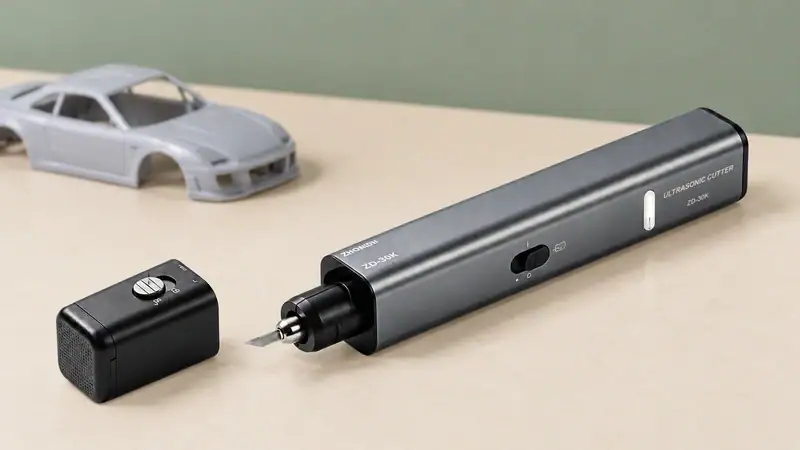
Our ZD-30K Ultrasonic Cutter Knife is intended for applications including 3D printed models, plastic models, wood, resin, PVC and acrylic. That range makes it relevant to model and craft cutting enquiries. For a particular part, evaluate the proposed cut within that application context.
A Material Name Is the Beginning of the Assessment
A material list helps you identify a relevant tool category. A useful evaluation then moves from the category to a representative workpiece. For example, “3D printed model” identifies an application, while the material at the cutting point provides a more specific basis for assessing the task. Together, the application and material descriptions give the equipment comparison a clear connection to the work you intend to carry out.
For buyers sourcing a handheld ultrasonic cutter for plastic, a representative workpiece provides a practical basis for assessing suitability. The intended cut, edge finish and surrounding detail are useful points to examine together. Where the application involves several types of part, the assessment can cover an example of each, giving your purchasing team results that relate directly to the intended work.
Define What an Acceptable Cut Looks Like
Describe the finished result before assessing a sample. Consider whether the edge will remain visible, whether the cut follows a defined outline, and whether the surrounding detail must be preserved. These observations give “clean cutting” a specific meaning for your project and make the finished samples easier to discuss.
Compare the result with your own acceptance criteria. Look at the cut edge, the position of the cut and the condition of the adjacent area. Record any finishing work your process would still require. For a visible edge, appearance may be a priority; for a part that will undergo another operation, the requirements of that next step may guide the review.
Make Sample Comparisons Easy to Interpret
A comparison using the same material and intended cut makes differences in the finished samples easier to interpret. Each sample can be assessed against the outline, edge appearance and surrounding detail required by the project. This gives the review a consistent reference point while allowing the blade arrangement to be considered alongside the result.
Keep the original workpiece description with the result, and identify the blade used. Where your decision covers several materials, assess each relevant example separately. Separate results show how each assessed example relates to its material and cutting task. The record can also identify which combinations are ready for a purchasing decision and which would benefit from further evaluation. For a purchasing team, that distinction makes the internal review easier: the recommendation can point to a specific task and observed result.
Where Does a Handheld Cutter Fit in Your Workflow?
The handheld format is an important part of the selection. Consider how the operator will approach the workpiece and whether the intended cutting area is accessible with a hand tool. The position of the intended cut relative to the surrounding surfaces is a useful reference when reviewing blade access and the working position.
For a model-making task, consider the sequence around the cut. What has already been assembled? Which surfaces need to remain available afterwards? A tool assessment becomes more useful when the cutting step is considered alongside the work immediately before and after it. This keeps the discussion connected to a real process.
If you already use another cutting method, compare the same task and the same acceptance criteria. Consider the finished part and the handling involved. The comparison can include how the workpiece is presented, the cutting operation itself and any finishing that follows. Together, these observations help you judge where a handheld ultrasonic cutter would fit into the existing process.
Read Frequency and Power in Context
ZD-30K uses 40 kHz high-frequency vibration and has a maximum output of 40 W. These figures describe the equipment being evaluated. Frequency identifies the vibration rate; maximum output is a separate specification. The finished cut is assessed separately against the requirements of the intended workpiece.
When comparing ultrasonic cutters, frequency and power can be considered alongside the application range, blade arrangement and electrical supply. These details describe different aspects of the proposed setup. Relating them to the intended task makes it easier to compare the complete equipment configuration and then assess the finished result on a representative part.
This is especially relevant when the products being compared have different physical formats. For a handheld cutting knife, the working position and access to the cut are relevant considerations. For equipment integrated into another process, the assessment will also reflect that installation. Identifying the required format early helps focus the comparison on equipment suited to the proposed working arrangement.
Evaluate the Blade as Part of the Cutting Task
Blade selection deserves attention early in the assessment. The supplied selection for ZD-30K includes K1-66, K1-67, K1-68, K1-69 and K1-70, with one of each. The defined references make it possible to identify the blade used for each sample and discuss the corresponding replacement item.
When examining a blade, relate its visible shape to the proposed cut. Consider access to the cutting point and how clearly the operator can follow the intended line. Compare the available blades against the same task. The sample results can then guide the choice of blade for that particular workpiece and cutting task.
If you assess several blades, keep a record of which reference produced each sample. That connects each result to a specific configuration and makes subsequent discussions about blade selection more precise. It also provides a clearer basis for choosing replacement items after you have established a preferred configuration.
Think Beyond the Initial Blade Selection
The same five blade references are offered as replacement items. A blade holder and fastening screw are also available as optional spare parts. For continued use, distinguish between replacing the cutting blade and replacing a part that holds it. These are different items with different roles in the assembly.
An importer evaluating this category can therefore consider the initial tool and its replacement tooling together. The practical question is whether the blade arrangement you select can be supported with the corresponding replacement reference. The model and blade reference provide a clear basis for discussing those replacement items together.
Check the Power Arrangement Before Comparing Convenience
A compact tool still needs a suitable electrical supply. ZD-30K operates at DC 12 V or 15 V and supports PD and QC protocols through a Type-C PD adapter. Assess those requirements together. Compatibility depends on the electrical input and supported protocols as well as the Type-C connection used by the tool.
The supplied contents include a Type-C power cord and a hex wrench, alongside the cutter and blade selection. Treat the cord and the adapter as distinct elements when reviewing a proposed setup. The adapter provides the supply, while the cord makes the connection; reviewing them together helps establish the proposed electrical arrangement.
For a workbench assessment, consider the tool with the intended compatible supply available. This connects the portability discussion to the arrangement in which you plan to use it. The metal-bodied handheld construction describes the physical format; the DC input and supported protocols describe a separate requirement that also needs to be satisfied.
Include Handling and Storage in the Evaluation
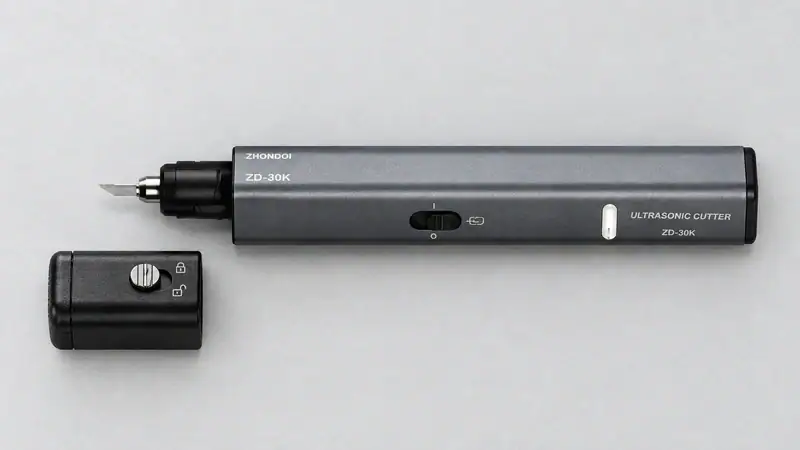
Cutting results are central, and everyday handling also deserves attention. ZD-30K has a function button, a working LED indicator and a protective cover with a locking function. These features are relevant when examining how the tool is controlled and how the blade is covered between uses.
During an assessment, consider whether the controls are easy to identify in your intended working position. Review the cover as part of storing the tool after the task. Keep operating and storage questions connected to the actual product; a protective cover serves a different purpose from a blade holder or a replacement cutting blade.
Request a Quote for Your Selected Configuration
Looking for a handheld ultrasonic cutter manufacturer and supplier in China? Partner with Zhongdi. Our factory supports importers, distributors and brand owners with the ZD-30K cutter and its listed replacement blades and holding parts. For wholesale enquiries, Contact Us to discuss product selection, pricing, packaging and target-market requirements.