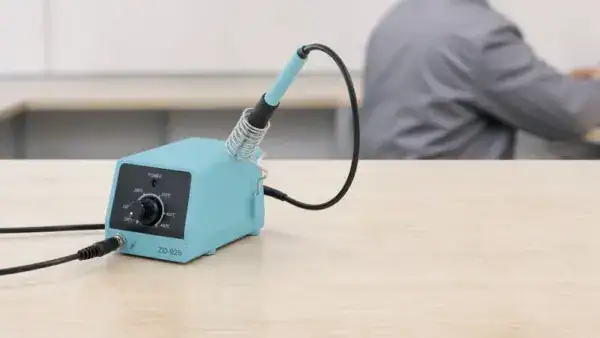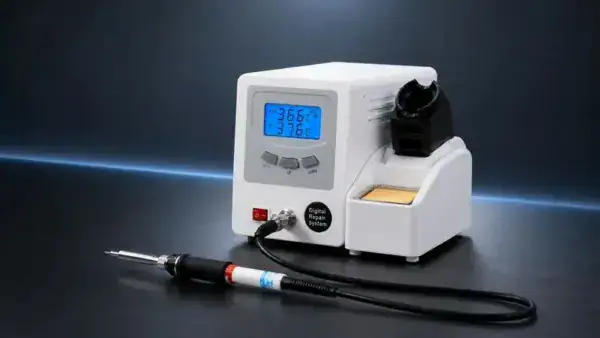
For a professional repair bench, the right combined rework station is the one whose published functions match the technician’s daily process. The number in the product name is only a starting point. A 2-in-1 station may combine soldering and hot-air rework, while a 3-in-1 station may combine soldering, fume extraction and task lighting. Importers, distributors and repair-equipment buyers should therefore compare the actual configuration before comparing the category label.
This guide explains how to choose between 2-in-1 and 3-in-1 rework stations for professional repair benches. It uses the published configurations of Zhongdi ZD-912 and ZD-8951 as practical examples, then focuses on workflow, bench layout, voltage selection and service-part planning. The objective is a clearer product record and a more useful quotation discussion for the channel.
Start With the Published Function Configuration
The first selection step is to write down the functions required at one workstation. This protects a catalogue, quotation or product-listing page from treating “2-in-1” or “3-in-1” as if those labels always represented the same processes. The official product specification provides the buying detail: what the station does, how it is controlled and which service items are listed for that exact model.
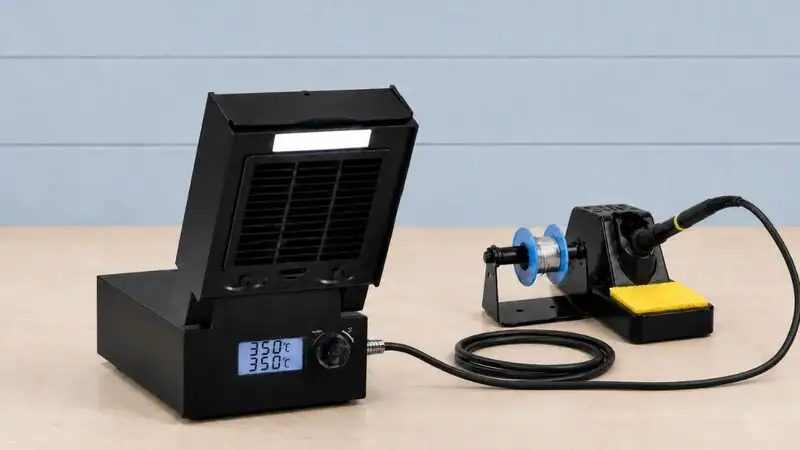
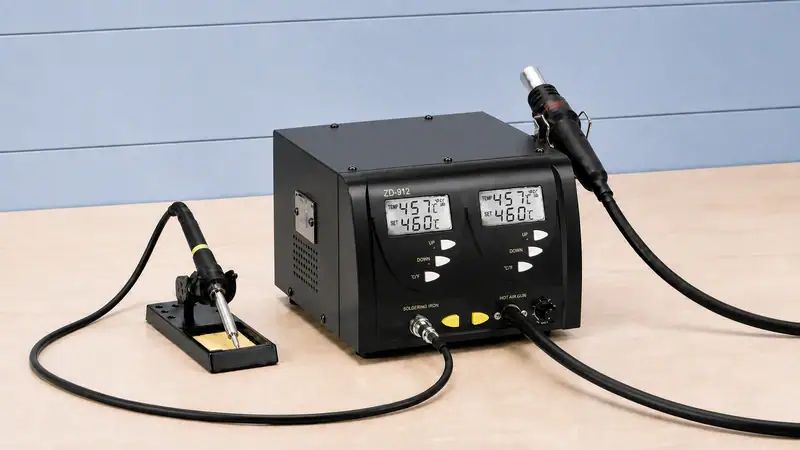
The ZD-912 2-in-1 Soldering and Hot Air Rework Station combines SMD soldering and hot-air rework. Zhongdi lists dual LCD displays, a 160 C to 480 C temperature range, adjustable hot-air volume of 3 to 24 L/min and ESD-safe versions. The ZD-8951 3-in-1 SMD Rework Station combines a soldering station, fume extractor and LED light. Its published specification lists a 160 C to 480 C temperature range, a 23 W fume extractor and airflow up to 1 m3/min.
| Repair-bench requirement | Published configuration to review | Selection question |
| SMD soldering and hot-air rework at the same position | ZD-912: soldering and hot-air rework | Are both processes required regularly by one technician? |
| Continuous soldering with fume management and close-range lighting | ZD-8951: soldering station, fume extractor and LED light | Does this combination suit the operator position and available bench space? |
| Different or additional repair processes | Review the exact published configuration of the intended model | Does the required process appear in the official feature list and specification? |
Choose a 2-in-1 Rework Station for SMD Process Coverage
A 2-in-1 rework station is a strong fit when a repair position repeatedly alternates between hot air and point soldering. The ZD-912 brings those two published functions into one unit. That makes it relevant for a professional bench handling SMD IC, PCB component and electronics rework tasks identified on the official page.
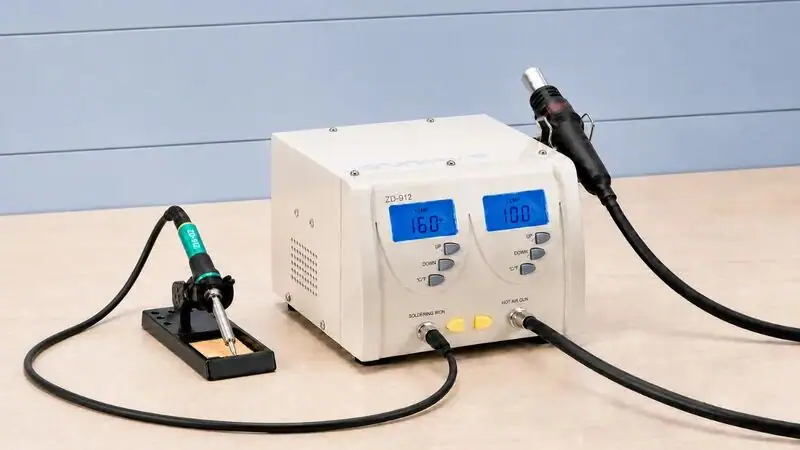
Buyers should look beyond the front-panel count and examine the control information. For ZD-912, the dual LCD displays help the operator view the two functions, while the published temperature and airflow ranges provide useful criteria for a distributor’s product comparison. The official page also identifies 110-130 V and 220-240 V versions, plus ESD versions. The electrical code should be confirmed before a quotation, inventory plan or destination-market listing is prepared.
Choose a 3-in-1 Station for a Soldering-Centred Bench
A 3-in-1 station is useful when the bench is centred on soldering and also needs integrated fume extraction and illumination. The ZD-8951 is a specific example of that configuration. Its product page identifies soldering, fume extraction and LED light as the three functions, so it should be evaluated as a soldering-focused workbench solution rather than as a hot-air station.
The official page also lists digital display, temperature adjustment by knob, PTC rapid heating and C/F conversion. For commercial planning, the relevant product codes are 89-5101 for 110-130 V and 89-5102 for 220-240 V. Keeping those codes with the model name reduces ambiguity when a distributor prepares a regional quotation or an after-sales record.
Plan the Repair Bench Before Ordering Equipment
Bench space affects both equipment selection and the usability of an integrated station. Measure the area for the main unit, handpiece or iron cable, iron stand, operator movement and the workpiece location. This simple review helps a buyer decide whether a compact combined station suits one technician or whether separate equipment is more appropriate for a broader workshop layout.
- Process frequency: Identify which functions are used at every repair position and which are only required occasionally.
- Workstation count: Consider how many technicians need access to the same process at the same time.
- Working position: Check cable routing, intake direction and light position against the intended operator area.
- Electrical version: Match the published voltage code to the destination market before confirming the order.
- Range strategy: Decide whether the channel needs a combined repair-bench offer, separate stations or both.
Include Service Parts in the Buying Decision
Professional purchasers should assess the maintenance items for the exact station at the same time as the main unit. A documented service-parts list gives distributors a basis for spare-stock planning and gives repair users a clearer route for maintaining the equipment over time.
For ZD-8951, Zhongdi lists N9 tip codes, replacement soldering iron ZD-415TB, spare heater 78-415T, activated carbon filter 79-7202 and sponge 79-7304. The page states that one activated carbon filter is included and identifies optional soldering wire stand model ZD-11L. These references should stay attached to the exact model in a channel catalogue, because parts from a similarly named station should not be assumed to fit.
For ZD-912, the official page identifies N4 tips, ZD-415A replacement iron, heater references, sponge 79-7305 and listed hot-air nozzles. Buyers can use this information to build a focused service list around the products they sell. It also creates a more productive RFQ, since the buyer can request information on the main unit, voltage version and the particular service items that matter to the target channel.
Use an RFQ to Confirm the Exact Rework-Station Setup
An effective RFQ identifies the repair process, selected model, required voltage version and the service parts the buyer wants to review. It can also state the target channel, such as a repair distributor, professional service centre, training supplier or specialist retailer. This gives the supplier the information needed to confirm the published configuration and prepare a relevant quotation.
For a professional repair bench, the key decision is straightforward: select ZD-912 when the published soldering and hot-air functions match the workflow; select ZD-8951 when the published soldering, fume-extraction and LED-light configuration matches the bench. Comparing the actual functions, rather than the number alone, gives buyers a practical basis for selecting a 2-in-1 or 3-in-1 rework station.
Looking for a Reliable Rework Station Manufacturer? Partner With ZHONGDI
ZHONGDI supports importers, distributors and brand owners with 2-in-1 and 3-in-1 rework stations, published replacement parts and repair-bench solutions. Contact us to discuss product selection, pricing, packaging and target-market requirements for your channel.