For production work, an automatic soldering iron is useful when its feed system, heat output and handling match the joint being soldered. Wholesale buyers therefore need to evaluate the complete working setup, with wattage and price treated as two parts of a wider decision. The most important checks are solder-wire delivery, temperature behaviour, operator control, replacement parts, electrical versions and the exact wholesale package. This guide explains how to assess those points and how to distinguish an integrated solder-feed gun from a temperature-controlled soldering and desoldering station.
Define the Production Task First
Start with the joint and the operator’s normal sequence. A buyer sourcing for cable assemblies may need one-handed wire feeding while the operator holds a connector or terminal. A repair bench may place greater value on adjustable temperature and desoldering capability. A distributor serving several customer groups may need both formats, but each should have a clear role in the product range.
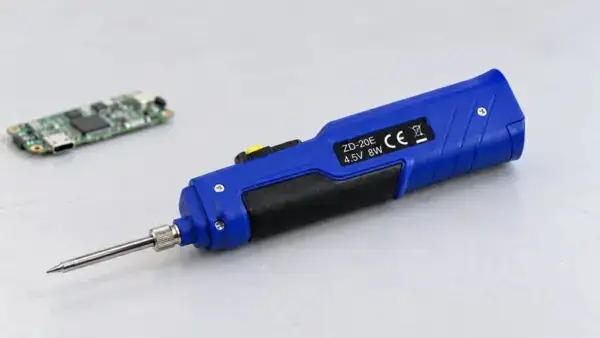
The phrase “automatic soldering iron” is used broadly in the market. It can refer to a hand-held tool with an integrated solder-wire feeder, a soldering iron connected to a separate feeder, or equipment built into a larger automated cell. These products differ in installation, training and service requirements. Defining what should be automated—wire delivery, heat control, tool movement or the complete soldering cycle—keeps the comparison relevant.
Where an Integrated Solder Feed Gun Fits
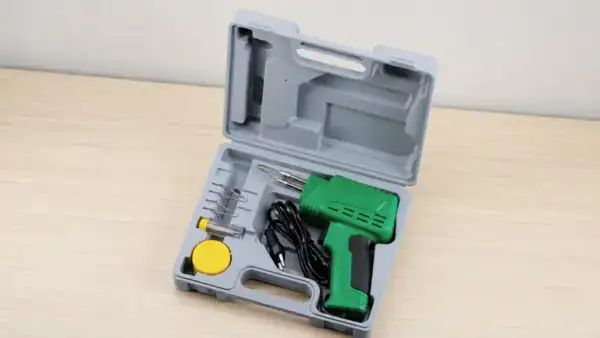
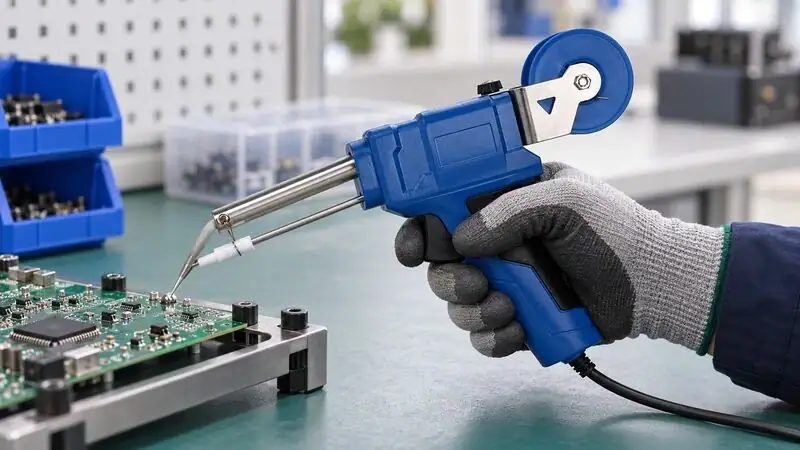
An integrated feeder gun combines the heating tool and solder-wire delivery in one hand-held unit. It suits repetitive work where the operator benefits from controlling the tool and the solder feed with the same hand. The other hand remains available to position a cable, component or fixture.
The ZD-555 soldering gun with solder wire feeder is Zhongdi’s example of this format. Its official product information describes one-handed trigger feeding, an adjustable feed-control device, 30W and 60W power modes, and support for solder wire within the stated diameter range. The standard product information also identifies a 2 m solder wire. For wholesale buyers, these details create a starting point for sample testing and catalogue positioning; the production trial still needs to use the customer’s actual wire and joint.
Seven Points Wholesevenale Buyers Should Evaluate
1. Solder Feed Action
The feed action should be predictable at the operator’s normal working pace. During a trial, observe how the wire starts and stops, whether the adjustment remains stable, and whether the wire reaches the tip at a consistent angle. Also check how long it takes to load a new spool or correct a feeding problem. A mechanism that is simple to demonstrate and reset is easier for a distributor to support after the sale.
2. Solder Wire Compatibility
Match the feeder to the wire sold in the target market. Diameter is the first check, followed by the route from the spool to the tip. The guide should hold the wire securely without creating unnecessary drag. Buyers should test the intended alloy and flux-core wire because different products can feed differently even when their nominal diameter is the same. Any guide component or adjustment required for another wire size should be identified by model before the product is added to a catalogue.
3. Heat Performance for the Intended Joint
Power is meaningful only in relation to the workpiece. A small PCB joint, a cable terminal and a heat-sinking connector place different demands on the tool. Use the real component, solder wire and workholding method during the sample test. Watch how the tool behaves across repeated joints and whether the operator must pause between cycles. This gives the buyer evidence for the intended application without turning a rated wattage into an unsupported production claim.
4. Handling and Workstation Layout
Tool balance, trigger position and cable routing affect how naturally the operator can repeat the task. The complete gun should remain supported by the operator during use, and its cable should move freely without pulling across the fixture. Check whether the spool or guide obstructs the view of the joint and whether the tip is easy to clean and replace. The result should be assessed with the actual bench layout because a comfortable demonstration setup may behave differently in a crowded workstation.
5. Tips Feed Parts and Service Items
A wholesale product remains useful only when common wear parts can be identified and reordered. Build a model-specific list of tips, heaters, wire guides and other replaceable parts shown in the official product information. Keep accessory codes tied to the correct model in quotations and sales materials. This reduces selection errors and helps distributors answer service questions without treating similar-looking parts as interchangeable.
6. Voltage Plug and Market Version
The sample should represent the version that will actually be sold. Check voltage, plug and power option against the destination market and the purchase order. Where grounding, ESD features or other variants are offered, list them only for the model and configuration that supports them. Clear version control is especially important when one distributor serves both European and North American customers.
7. Packaging Documents and Carton Data
Wholesale evaluation continues beyond the tool itself. The quotation, product page and packing information should agree on the model, included items and optional parts. Carton quantity, carton dimensions, net weight and gross weight affect freight planning and warehouse handling. Operating instructions, product images and a model-specific parts list also help the buyer prepare listings, sales training and after-sales support before stock arrives.
When a Temperature Controlled Station Is the Better Fit
Some production and service work depends more on controlled soldering and desoldering than on automatic wire feed. In that case, a station belongs in a different comparison group. Presenting it separately helps customers understand why its controls, handpieces and service parts differ from those of an integrated feeder gun.
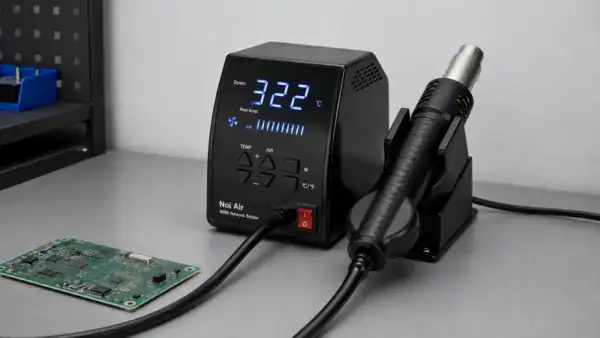
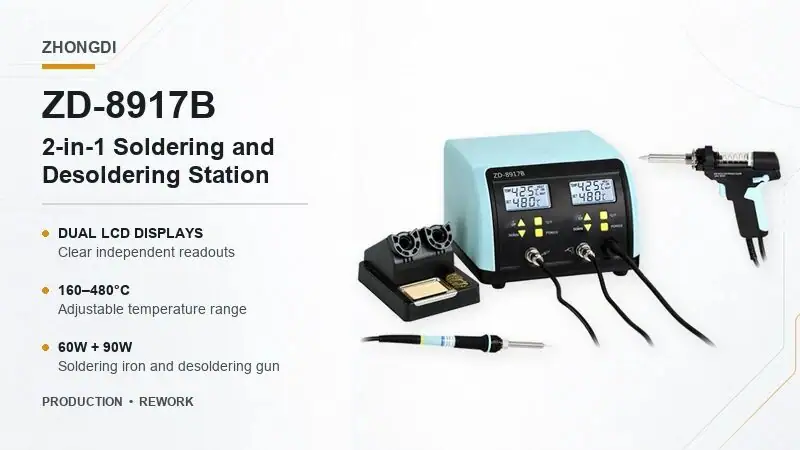
The ZD-8917B soldering and desoldering station combines a 60W soldering iron and a 90W desoldering gun. Zhongdi’s product information lists dual LCD displays, microprocessor control and an adjustable range of 160–480°C. These features suit buyers who need soldering and desoldering in one station. The product should be positioned as a production and rework station, while the ZD-555 remains the relevant option for integrated solder-wire feeding.
Run a Production Trial Before Ordering
A focused trial provides better buying evidence than a long feature list. Set up the sample with the proposed voltage version, the intended solder wire and the customer’s real board, cable or terminal. Ask an experienced operator to complete a representative batch while another person records the setup and observations.
For an integrated feeder gun, note the wire diameter, feed adjustment, loading time, start-and-stop response and ease of reaching the joint. Inspect the wire path after repeated cycles and check access to the tip for cleaning or replacement. For a temperature-controlled station, record the selected temperature and observe its behaviour when the joint draws heat from the tip. Include desoldering when it is part of the intended task so the trial represents the complete workflow.
Photograph the tested configuration and record every item supplied with the sample. The record gives the purchasing team, sales staff and supplier the same reference point. It also makes later questions easier to resolve because the tested voltage, tool, wire and workpiece are clearly identified.
Plan the Product Range Around Clear Use Cases
A distributor can stock both formats without making the range confusing. Place the integrated feeder gun with products for repetitive hand-held soldering and one-handed wire delivery. Place the temperature-controlled soldering and desoldering station with bench equipment for repair, rework and controlled heating.
The ZD-555 gives the range a compact solder-feed option for suitable production and service tasks. The ZD-8917B covers a separate requirement for soldering and desoldering at a controlled station. Product pages, sales sheets and quotations should preserve this distinction. Customers can then choose according to workflow, using the “automatic” label only where it accurately describes the product.
Choose the Tool That Matches the Workflow
The right product depends on the step the buyer wants to improve. An integrated feeder gun can simplify solder-wire delivery during repetitive hand-held work. A soldering and desoldering station is more suitable when temperature control and rework capability are the main requirements.
The linked product pages provide the available configurations, package information and spare-part details for each model.
Looking for a reliable soldering tool manufacturer? Partner with Zhongdi.
Zhongdi supports importers, distributors and brand owners with integrated solder-feed guns and soldering and desoldering stations. Contact Us to discuss product selection, pricing, packaging and target-market requirements for your channel.