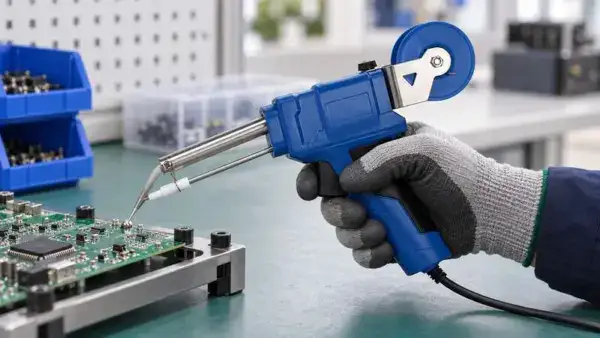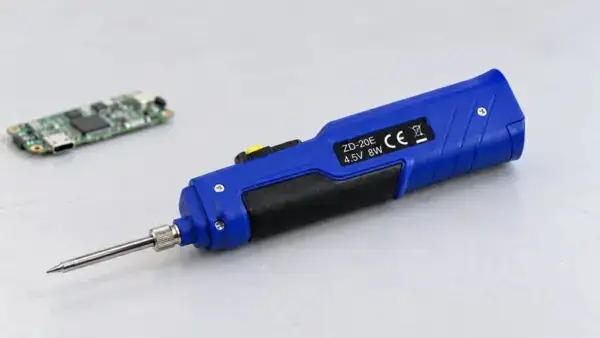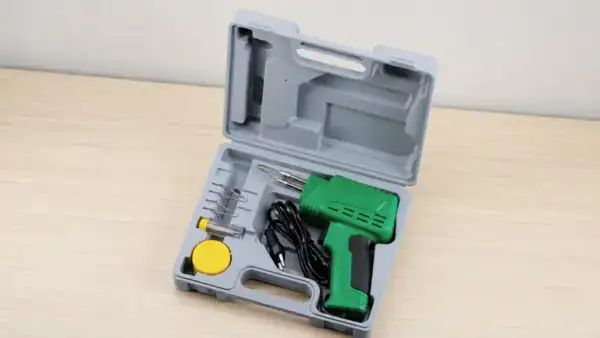
For electronics-repair and assembly channels, a buying guide should begin with a clearly identified soldering station, not an assumed workstation bundle. The electrical version, temperature range, iron specification, supplied contents and packaging all affect whether a product is suitable for a customer offer. For distributors, importers and brand owners, recording those details before requesting a quotation reduces ambiguity in catalogue, sales and after-sales work.
This guide focuses on the ZD-928 ESD-Safe Soldering Station. Its published product details provide a practical starting point for a purchasing enquiry. Where a buyer needs a particular ESD standard, test result, grounding arrangement or approval document, that requirement must be stated separately and confirmed against the customer’s own process requirements.
Start With the Required Soldering Task
A useful enquiry starts with the intended task. State whether the buyer is evaluating the station for electronics repair, assembly, training or another use. The ZD-928 product page lists applications including electronics repair, factory use, machinery repair shops and soldering. It also describes the model as designed for soldering and desoldering surface-mounted devices, particularly cell-phone devices and other small electronic components.
Next, identify the destination market and required electrical version. The published ZD-928 specification lists 110V-240V input voltage and 12V AC output voltage. The enquiry should still state the customer’s market and voltage requirement explicitly. A published voltage range is useful product information; it is not, by itself, confirmation of the exact configuration being quoted.
Buyers should also decide what needs to be documented for their own range. A compact product may suit a particular repair offer, but the final selection should reflect the customer application, commercial positioning and the evidence required by the buyer’s quality process.
At this stage, separate essential requirements from preferences. For example, destination voltage and a customer-mandated approval document are requirements that need a clear supplier response. Housing colour, retail presentation or a requested branded arrangement may be commercial preferences that also need to be included in the quotation request. Keeping these points separate gives the supplier a clearer brief and helps the buyer compare replies without assuming that every published feature applies to every proposed order.
Review ZD-928 as a Stand-Alone Product
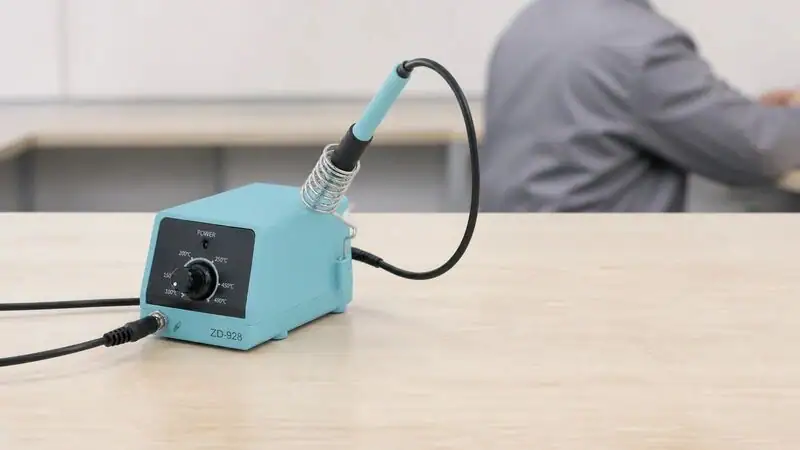
ZD-928 should be assessed on its own published specifications. The official page identifies an ESD-safe soldering station with 100°C-450°C knob control, a 10W, 12V iron, a conical replaceable tip and a net weight of 0.6 kg. It also lists a blue housing and gift-box packaging. These facts describe the product; they do not establish that other ESD products are included with the station.
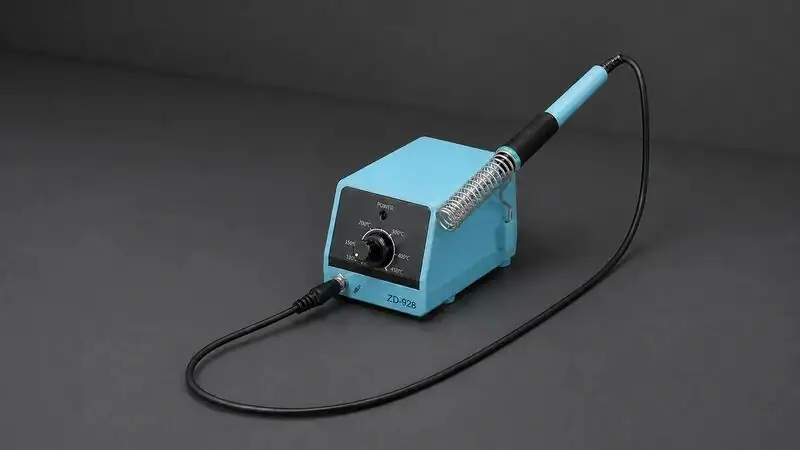
| Published item | ZD-928 detail |
| Temperature control | 100°C-450°C, knob control |
| Iron | 10W, 12V |
| Input / output voltage | 110V-240V input; 12V AC output |
| Tip | Conical; replaceable |
| Weight | 0.6 kg |
| Package | Gift box |
The product page also identifies a light soldering iron with a slip-resistant handle and a small iron holder. If pack contents, a replacement-tip reference, customisation or another supply detail will appear in a catalogue or quotation, ask Zhongdi to confirm the exact order configuration before making that statement to a customer.
For channel planning, the published size and weight can help a buyer begin an internal review of shelf presentation, parcel handling and product-data fields. However, a catalogue team should use the final supplier-confirmed commercial information for the order, including the packaging arrangement and carton data, rather than treating a preliminary web listing as a purchase-order specification. This is particularly important when a buyer expects local labelling, a market-specific electrical version or a customised retail presentation.
Keep ESD Approval Separate From Product Labeling
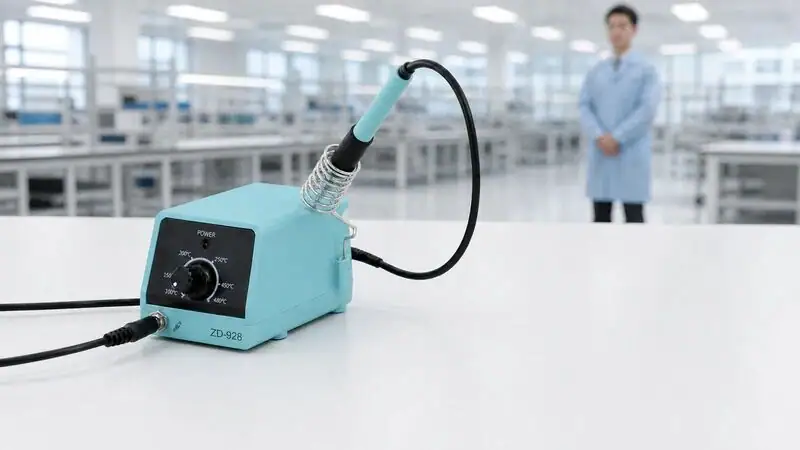
The ZD-928 page identifies the model as ESD safe. That label does not establish that a proposed bench meets a buyer’s customer-specific ESD-control requirement. A customer may require a particular standard, test method, resistance value, grounding arrangement, certification scope or approval record. These requirements should be supplied with the enquiry and assessed using evidence for the requested configuration.
This distinction matters in B2B sales. It prevents a catalogue description from overstating what the published page confirms, while giving quality and purchasing teams a clear route to request the evidence relevant to their own process. If no additional ESD documentation is required by the customer, do not imply that an unrequested standard or test has been supplied.
Use a Clear Technical-Enquiry Checklist
A focused enquiry gives the supplier a concise description of the required station, market and confirmation points. It also gives the buyer a record that can be reviewed by purchasing, quality, product-data and sales teams.
- Application: State whether the request is for electronics repair, assembly, training or another intended use.
- Station model and electrical version: Identify ZD-928, the destination market and the required voltage.
- Order configuration: Ask the supplier to confirm supplied contents, packaging and any requested customisation for the quoted configuration.
- Technical evidence: Specify the ESD-related measurements, reports, standards or certification documents the customer requires for review.
- Tip and service needs: Ask the supplier to confirm the applicable replacement-tip reference and any required service parts.
- Commercial request: Provide required quantities, packaging expectations and delivery destination so the supplier can prepare an appropriate quotation.
This checklist keeps published product details, customer-specific approval requirements and quoted supply contents distinct. It makes the enquiry easier to hand between teams without losing the selected model reference or introducing an unverified claim.
Record the Details Needed for Repeat Purchasing
For a distributor or importer, the first quote should create a usable record for future orders. Record the exact model name, product-page URL, requested voltage, destination market, package configuration, requested technical documents and quotation reference. This keeps the catalogue description aligned with the order rather than relying on a broad product label.
The ZD-928 page confirms a replaceable conical tip, but it does not publish a replacement-tip order code. Treat that as a supplier-confirmation question before promising a particular spare part, compatibility claim or stock plan. Apply the same discipline to any service parts, customised support and packing details.
A consistent record also improves downstream communication. Sales teams can refer to the approved ZD-928 description instead of adapting product claims from memory. Customer-service teams can locate the quotation reference when they receive a question about voltage, package contents or service planning. Purchasing teams can use the same record for replenishment discussions. These are process benefits of clear product identification; they do not require the buyer to present separate ESD tools as a supplied or compulsory part of the station.
Related ESD Products: Review Them Separately
For buyers sourcing a wider range of electrostatic-control products, Zhongdi’s ESD-Safe Tool category lists wrist straps, ESD tweezers, an ESD-safe cleaning brush and an electronics-repair soldering mat. Each is an independently listed product. Review its own product page, specifications and quotation requirements separately; the category listing does not state that these items are supplied with, attached to or required for ZD-928.
Make Evidence Part of Final Approval
Before releasing an order, compare the supplier’s response with the buyer’s stated requirements. Confirm the exact ZD-928 configuration, electrical version, package contents, requested technical evidence and commercial terms. The final quotation should identify the approved order configuration clearly.
Before publishing a product listing, use the approved quotation and supplier confirmation as the final reference. Do not copy unverified service, compatibility, certification or pack-content claims from a draft sales brief into the catalogue.
For repair and assembly channels, this approach creates a more reliable listing and a more useful sales conversation: a verified soldering-station model, a documented set of published specifications and a clear list of points that still require supplier confirmation. It also lets teams distinguish a ZD-928 enquiry from a separate request for an ESD accessory.
Looking for a reliable soldering station manufacturer? Partner with Zhongdi.
Partner with ZHONGDI. We support importers, distributors and brand owners with ZD-928 ESD-safe soldering stations and separately listed ESD-safe tools. Contact us to discuss product selection, pricing, packaging and target-market requirements for your channel.