Quick Response: Key Turnover Takeaways
-
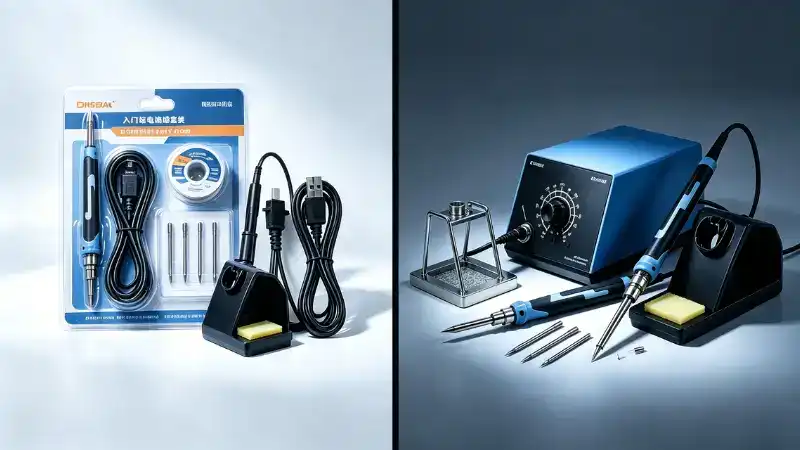
Kits for Speed (High Turnover): Soldering iron kits turn inventory fastest. The all-in-one bundle appeals to a massive, broad market of hobbyists, DIYers, and e-commerce shoppers, lowering purchasing friction.
-
Stations for Value (Higher Margins): Standalone stations yield higher-ticket sales but move slower. They require a longer technical evaluation cycle and target a narrower professional audience.
-
Channel-Driven Demand: Kits act as the high-volume engine for retail/marketplaces, while stations generate steady, predictable reorders primarily within specialized repair, educational, or industrial channels.
-
The Optimal Mix: To balance cash flow and profitability, wholesale buyers should adopt a hybrid portfolio—using kits to drive stock rotation and stations to capture premium upsell value.
Introduction
In the electronic tool supply chain, market demand patterns for soldering equipment generally split into two categories: kits sell on breadth, while stations sell on depth. Understanding this distinction is critical for distributors prioritizing stock turnover, cash flow, and high order frequency over one-time profit margins.
For global procurement managers requiring a stable supply chain, it’s vital to select the optimal product mix. Manufacturers like Ningbo Zhongdi (ZHONGDI)—established in 1994 with a 10,000㎡ workshop capacity, 26 IP patents, and comprehensive OEM/ODM support—demonstrate that long-term profitability relies heavily on balancing high-turnover SKUs with high-value technical models.
Market Demand Patterns: Assessing Soldering Iron and Solder Trends
Why Kits Move Faster in Basic Soldering Markets
A soldering iron kit offers immediate, self-explanatory value to the end consumer. For beginners tackling their first soldering tasks or basic soldering projects, an all-in-one kit serves as the ideal iron for hobbyists. By bundling the tool with a sponge to clean the tip, a secure stand that safely keeps the iron in place, and extra soldering bits, it removes purchasing friction for those learning to solder or performing simple soldering tasks around the house.
For wholesale channels, this bundled logic serves multiple advantages:
-
Broad Target Audience: Ideal for hobbyists, students, basic cable repair, and entry-level electronics repair.
-
Merchandising Flexibility: Supports gift-set promotions, starter kits, and multi-item marketplace bundles.
-
Low Decision Friction: Minimizes buyer hesitation since all necessary components are included in one purchase.
Why a Standalone Soldering Station Sells Differently
When evaluating advanced units, a standalone iron station targets a narrower, highly specialized demographic. These units are typically selected for precise temperature control on a complex circuit board, heavy-duty repair benches, and continuous professional use in repairing electronics.
The procurement cycle for these units differs significantly as professional soldering stations come with more rigorous buyer evaluation:
-
Technical Evaluation: Professional users demand specific data regarding heat stability, thermal recovery, the exact temperature of the tip, and stable power supply delivery to maintain a proper soldering temperature under heavy loads.
-
Longer Sales Funnel: Buyers often compare specialized technical specifications, leading to extended evaluation periods.
-
Lower Velocity, Higher Value: While the unit margin is often considerably higher, the overall inventory turnover rate is typically slower compared to entry-level kits.
Turnover Economics: Choosing a Good Soldering Tool Strategy
Kit Inventory Logic: From Standard Models to Smart Soldering Irons
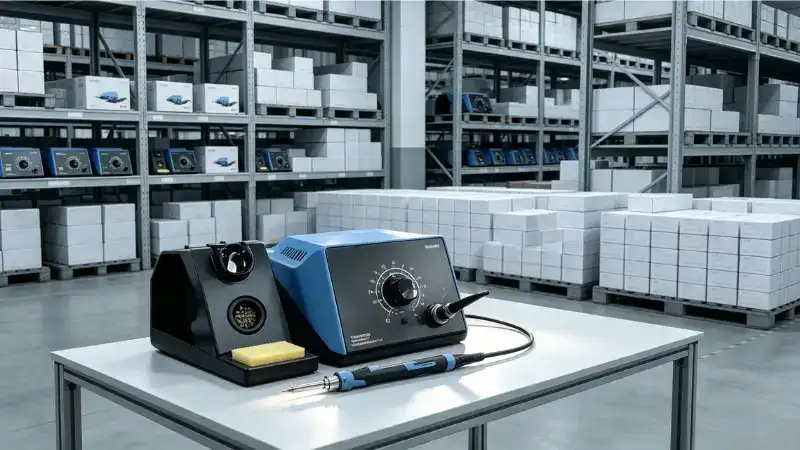
Kits optimize inventory replenishment cycles because a standard type of soldering iron bundled into a complete package satisfies multiple market segments simultaneously. Whether a user needs a hot iron to melt solder on a quick cable splice, or an iron that heats up quickly for crafting, the overall purpose of the soldering tool remains universally accessible. Retail buyers looking for an efficient option for entry-level electronics work will naturally favor these configurations, making them an excellent volume engine for portable and residential tool categories.
Station Inventory Logic: Integrating Solder, Rework, and Hot Air Capabilities
Stations require more intensive pre-sales support and technical marketing. For precision soldering and high-reliability electronics assembly, users must carefully set the temperature based on the specific components involved. Wholesale buyers routinely inquire about advanced performance metrics, including:
-
Lead-free solder compatibility and through-hole thermal performance.
-
SMD rework capabilities and integrated hot air gun performance.
-
Desoldering support, variable temp control, and maximum amount of heat delivery.
While this increased technical requirement results in narrower demand concentration, it offers excellent revenue stability. Once a station model is approved and adopted by an engineering firm, replenishment orders become highly predictable.
Product Mix Strategy for Wholesalers
Optimal Wholesale Allocation: Finding the Best Soldering Mix
The most resilient inventory strategy relies on a balanced portfolio where kits drive sales velocity and stations anchor technical authority.
| Product Type | Main Target Buyer | Sales Velocity | Margin Potential | Inventory Risk |
| Soldering Iron Kit | Retailers, e-commerce sellers, hobbyist channels | High | Medium | Lower |
| Portable Soldering Iron | Field repair technicians, mobile/remote users | High | Medium | Lower |
| Standalone Soldering Station | Repair shops, engineers, industrial distributors | Medium | Higher | Higher |
| SMD Rework Station | Professional electronics repair centers | Medium | Higher | Higher |
Portfolio Implementation: Benchmarking Alternatives
To capture both high-turnover and premium segments, wholesalers often diversify their catalogs to accommodate a variety of soldering applications. For field technicians who need to start soldering immediately on-site, modern cordless irons or a portable tool that heats up fast and is quick to heat are the perfect iron to get. Alternatively, when choosing industry benchmarks like the popular hakko fx-888d or evaluating a fixhub portable soldering station, buyers look at how distinct irons and stations fulfill unique market niches.
For heavy-duty industrial tasks or working with thick sheet metal, tools must deliver a higher temperature through a rugged chisel tip to successfully melt the solder. Conversely, soldering small surface-mount devices requires an entirely different setup—proving that a balanced inventory must cover multiple soldering uses from common soldering up to advanced soldering configurations.
Factory Quality and Compliance Controls
Supply Chain Reliability: Standardizing Production
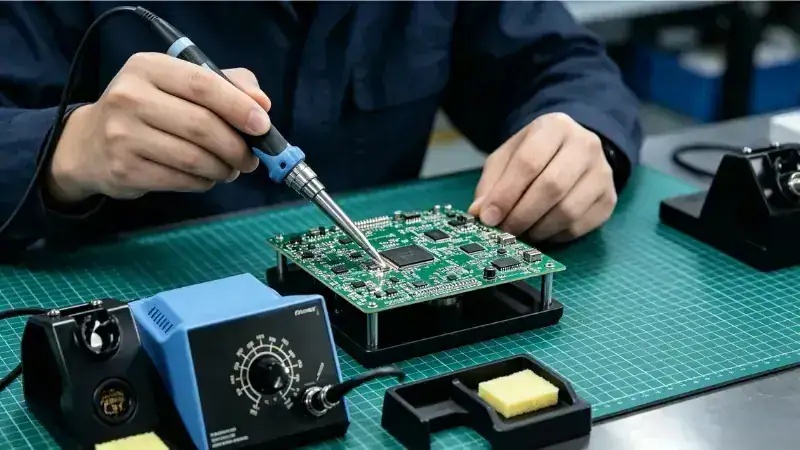
W holesale inventory turnover depends heavily on factory consistency, predictable lead times, and robust packaging standards. Maintaining quality soldering standards in bulk production depends on structured ERP systems and 5S production management. High-grade equipment used for soldering electronic components requires precise calibration to ensure it delivers the correct heat to melt solder reliably without damaging delicate components.
International trade compliance also minimizes onboarding friction for multi-market distributors. Procurement verification should prioritize factories maintaining comprehensive global certifications, including:
-
Quality & Environment: ISO 9001, ISO 14001
-
Safety & Compliance: CE, EMC, TUV-GS, REACH, SAA, and Amfori BSCI
Engineering Verification
A professional manufacturing workflow directly impacts product reorder rates. Reliable suppliers employ dedicated R&D engineering teams to oversee product development from concept design through to mass production testing. This ensures precision iron tip fit, optimal handle ergonomics, and stable heating response. Factories should also include clear safety documentation, reminding end users to work in a well-ventilated area and to regularly wipe the tip using a proper sponge for cleaning to extend the tool’s operating life.
Buyer Decision Guide
Prioritize Kits When:
-
The primary objective is rapid SKU rotation and broad market reach.
-
The target demographic consists of hobbyists, DIYers, or electronics beginners.
-
Sales are conducted via e-commerce marketplaces where complete tool bundles yield higher conversion rates.
Prioritize Stations When:
-
The target market requires precise temperature control and high thermal stability.
-
The distribution network serves professional repair technicians, engineering firms, or industrial facilities.
-
The sales team is equipped to handle higher-touch technical comparisons and product support.
Conclusion: Winning with a Hybrid Inventory Strategy
For wholesale distributors and global procurement managers, relying exclusively on one category of soldering tools leaves revenue on the table. The most profitable, risk-adjusted approach is a hybrid inventory strategy. By leveraging the high-volume, rapid turnover of soldering iron kits to maintain healthy cash flow, and balancing it with the premium margins and predictable reorders of standalone stations, you can capture both the consumer and professional markets.
Ready to optimize your product catalog? Partnering with an experienced OEM/ODM manufacturer ensures you get the right mix of reliable, globally certified soldering equipment tailored specifically for your distribution channels.
Frequently Asked Questions
Q: What is better for wholesale turnover, a soldering iron kit or a station?
A: A soldering iron kit generally delivers faster inventory turnover because it caters to a wider audience and solves multiple needs out of a single box. Standalone stations yield higher unit profit but experience slower turnover due to a narrower, more technical buyer base.
Q: Why do soldering iron kits convert more easily on retail channels?
A: The all-in-one packaging eliminates the need for end-users to source separate components (like stands, tips, and solder). This convenience significantly lowers purchasing hesitation for hobbyists, DIYers, and retail shoppers.
Q: Which equipment is recommended for professional repair channels?
A: Standalone soldering stations and SMD rework stations are preferred. Professional distribution channels prioritize precise temperature stability, rapid thermal recovery, and component-level compatibility over entry-level pricing.
Q: How should a distributor balance inventory between kits and stations?
A: Kits should be utilized as the primary volume driver for cash flow, while stations serve as premium, higher-margin offerings. A robust standard portfolio typically includes basic kits, USB/portable models, and at least one mid-to-high-tier temperature-controlled station for upsells.
Q: What factors typically slow down the sales cycle of a soldering station?
A: The B2B sales cycle lengthens because professional buyers require detailed verification of technical parameters, such as lead-free performance, hot air compatibility, thermal recovery rates, and long-term spare parts availability.