Retailers’ Quick Pre-Sourcing Checklist
Before committing to a wholesale supplier, verify the following:
- ✔ Verify temperature stability and heat recovery speed metrics.
- ✔ Confirm CE, RoHS, and ESD safety certifications.
- ✔ Audit the supplier’s ERP system and production lead time reliability.
- ✔ Evaluate OEM/ODM capabilities for branding and packaging.
- ✔ Request product samples for performance testing before placing large-volume orders.
Introduction: Hidden Risks When Sourcing a Digital Soldering Station Supplier
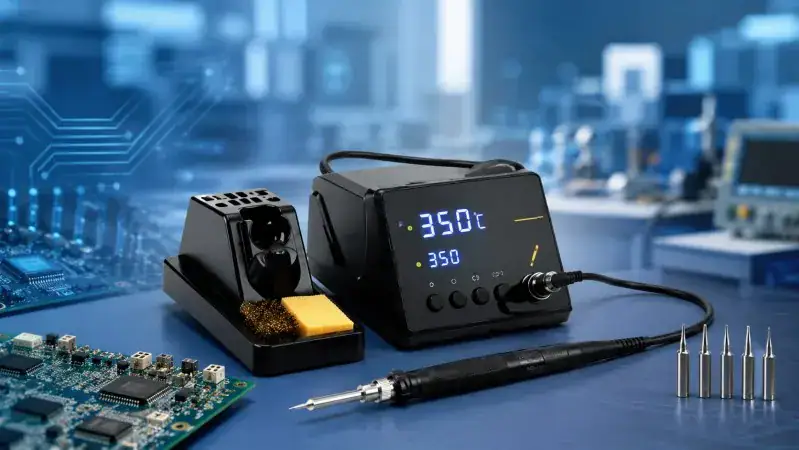
Successful bulk procurement of digital soldering stations hinges on verifying temperature stability, safety certifications, factory output reliability, and custom branding support before signing any supplier contract.
Many retailers only compare upfront unit costs and overlook these non-negotiable benchmarks, which triggers uneven product quality, delayed shipments, dissatisfied end buyers, and damaged brand credibility.
Below we lay out every key technical and production standard buyers must check to eliminate sourcing risks entirely.
Evaluate Digital Soldering Station Heating Technology & Temperature Stability
Heating performance is the foundation of every reliable soldering station. Fast temperature recovery and precise temperature control directly affect solder quality, operator efficiency, and component safety.
Heating Element Technology for Professional Soldering Iron Stations
Ask potential suppliers about the heating technology used in their soldering stations.
High-quality ceramic heating elements typically offer:
- Faster heat-up time
- Better thermal efficiency
- Longer service life
- More stable temperature control than traditional nichrome heaters
Professional digital soldering stations should maintain stable temperatures even during prolonged operation.
Temperature Accuracy, Power & Precision Specifications
When evaluating a solder station, verify the following specifications:
- Adjustable temperature for different PCB sizes and applications
- Temperature accuracy within ±2°C
- Fast temperature recovery after soldering large joints
- Minimum 60 W output power for lead-free soldering applications
These specifications help ensure consistent solder quality while minimizing the risk of overheating sensitive electronic components.
How to Verify Model Performance Before Bulk Orders
Rather than relying on marketing materials, request actual testing data.
Ask suppliers to provide:
- Heat recovery time reports
- Temperature stability curves
- Temperature calibration reports
- Quality inspection records
Many reputable manufacturers benchmark their products against industry-leading brands to validate performance. If a supplier cannot provide objective performance data, product consistency may be difficult to guarantee.
Verify International Compliance & Safety Standards for Digital Display Soldering Iron Products
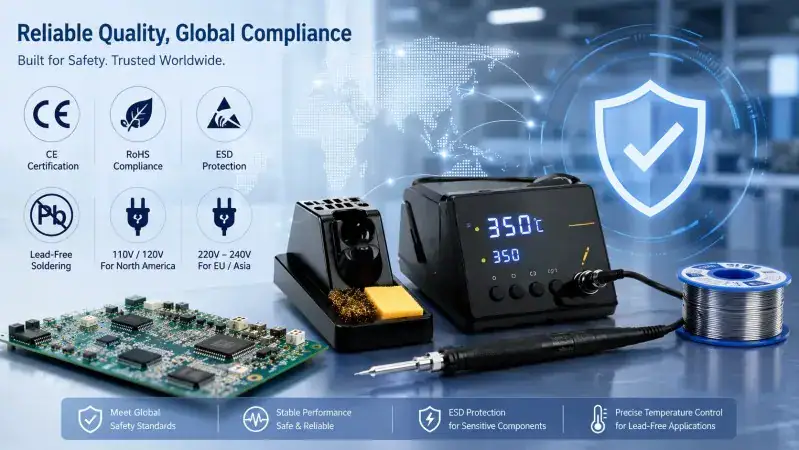
Regulatory compliance is essential for retailers serving international markets. Products without proper certifications risk customs delays, marketplace restrictions, or costly product recalls.
CE, RoHS & Lead-Free Compliance
For most European and North American markets, CE and RoHS certifications are considered essential.
Verify that all certification documents are current and corresponds to the exact product model being purchased.
ESD Protection for Smart Soldering Applications
Electrostatic discharge (ESD) protection is particularly important when repairing:
- Smartphones
- Laptops
- Motherboards
- Industrial electronic equipment
Ensure the soldering iron handle, stand, and grounding system are designed using certified ESD-safe materials to protect sensitive components.
Lead-Free Compatibility for Modern PCB Repair
Modern electronics manufacturing primarily uses lead-free solder.
Confirm that the station can maintain stable temperatures required for lead-free soldering without excessive temperature fluctuations.
Regional Voltage & Plug Standards
Verify that the supplier offers configurations suitable for your destination market, including:
- 110 V or 120 V models for North America
- 220 V–240 V models for Europe and many Asian countries
- Appropriate regional plug types
Assess Factory Operations, Quality Control & Supply Chain Reliability
Even excellent products become a liability if production cannot keep pace with demand.
Reliable manufacturing systems help ensure consistent quality and on-time delivery throughout the purchasing cycle.

ERP-Based Material Tracking & Production Management
Since being founded in 1994, ZHONGDI has implemented advanced ERP management to monitor more than 20,000 material components.
This system provides:
- Real-time inventory tracking
- Reduced risk of material shortages
- Accurate production scheduling
- Improved delivery reliability
Production Planning for Portable and Standard Models
Our 10,000㎡ manufacturing facility operates under standardized 5S management practices to reduce production errors and improve manufacturing efficiency.
When evaluating any supplier, ask about:
- Production scheduling
- Capacity planning
- Inventory management
- Quality documentation
- Lead time consistency
These systems often distinguish professional manufacturers from trading companies.
Quality Control Process
A reliable supplier should implement quality inspections throughout the manufacturing process.
Ask whether they perform:
- Incoming material inspection
- Heating element calibration
- Functional testing
- Temperature accuracy verification
- Aging tests
- Final inspection before shipment
Consistent quality control reduces product returns and improves long-term customer satisfaction.
Compare Digital Soldering Station Models for Different Retail Markets
Different customer groups require different product configurations. Selecting the appropriate product line helps retailers better match local market demand.
| Product Series | Key Feature | Best Application |
|---|---|---|
| ZD-8951 | Hot air rework station | BGA and SMD component rework |
| ZD-8950 | Portable soldering station | Field service and mobile repair |
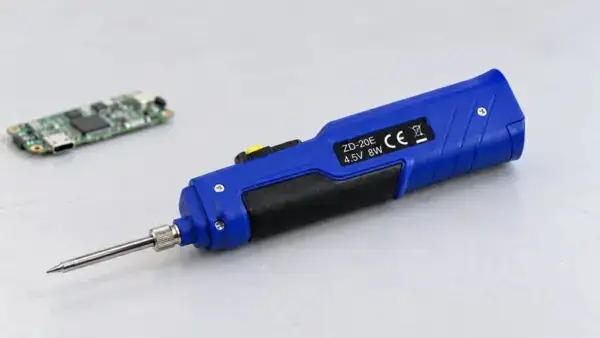
| ZD-20U | USB soldering iron | Hobbyists, education, portable electronics |
| Classic Digital Series | Digital temperature display | Professional repair laboratories and service centers |
Offering multiple product categories also enables retailers to serve both entry-level and professional customers.
Evaluate OEM, Private Label & Upgrade Capabilities
Beyond product quality, retailers should consider whether the manufacturer can support long-term brand development through OEM and private-label services.
Customized packaging and private labeling help differentiate your products in competitive markets while strengthening customer recognition.
Branding Options
OEM services may include:
- Custom logos on product housings
- Private-label packaging
- User manuals with your branding
- Customized carton designs
Customized Product Kits with Helping Hands & Nozzle Options
Many distributors and retailers increase average order value by offering complete repair kits.
OEM kit options may include:
- Helping hands accessories
- Brass tip cleaners
- Additional soldering iron tips
- Hot air nozzles
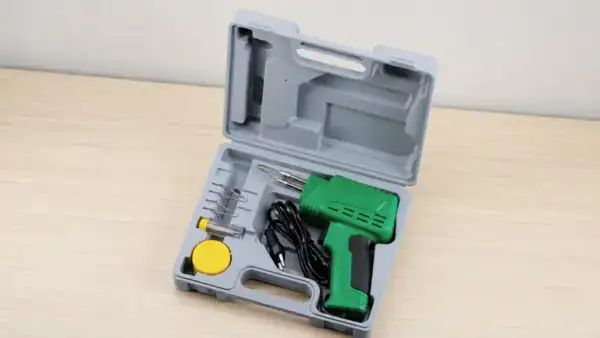
- Tool storage cases
Customized kits create stronger product differentiation and improve retail shelf appeal.
Next Steps for Wholesale Cooperation
Reliable equipment is only one part of a successful retail business. Choosing a manufacturer with proven technical expertise, robust quality control, regulatory compliance, and dependable production capacity helps reduce procurement risks while supporting long-term growth.
Whether you need standard wholesale products or fully customized OEM solutions, we are ready to support your sourcing requirements.
To learn more, you can:
- Browse our complete product catalog
- Request detailed technical specifications
- Schedule a factory tour
- Discuss your OEM or private-label project with our team
Our technical specialists are ready to help you identify the best solutions for your market.